FOLDLUME - MIXED USE CULTURAL CITY PAVILION IN CULTURE PARK


Idea projektu
Project Aim:
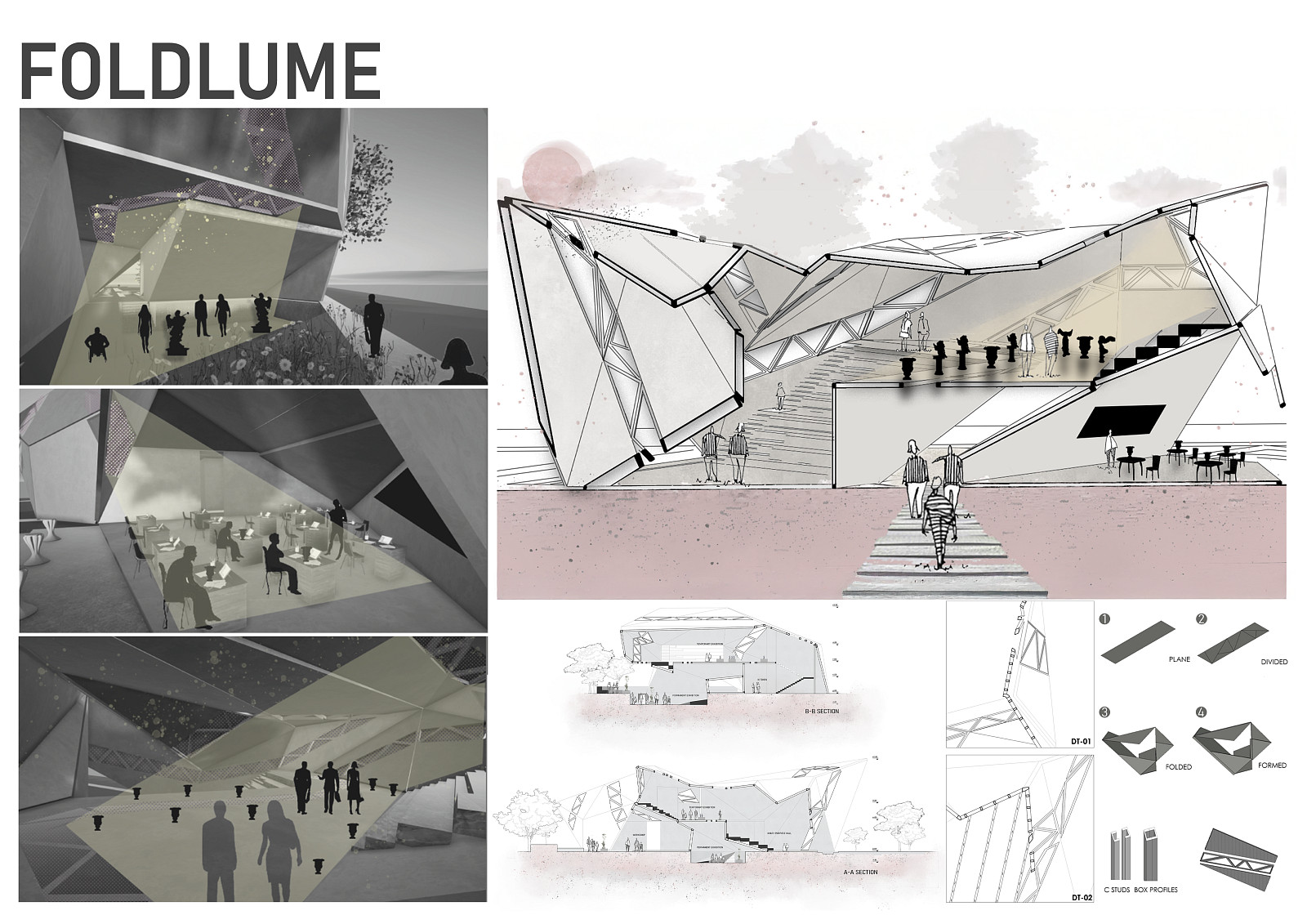
The İzmir City Pavilion is a contemporary public structure designed within Kültürpark. The project aims to establish a cohesive framework that integrates cultural identity and diversity, history and memory, art and creativity, as well as innovation and technology. Throughout the design process, contemporary structural systems were employed and computational design strategies were incorporated into the project. In this context, dynamic interior and exterior spaces with spatial flexibility were created. The pavilion was envisioned as a well organized, functional, and visually compelling public landmark.
Since the amusement park area is planned to be demolished, it was assumed that the City Pavilion could be located on the existing amusement park site.
From the Republican era to the present day, social and political transformations have shaped the urban landscape and public spaces, while architecture, monuments, and sculptures have occupied a significant place in the city’s collective memory.
Within this framework, the project focuses on the integration of İzmir’s monument sculptures with form and light.
Popis projektu
Concept - Flow:
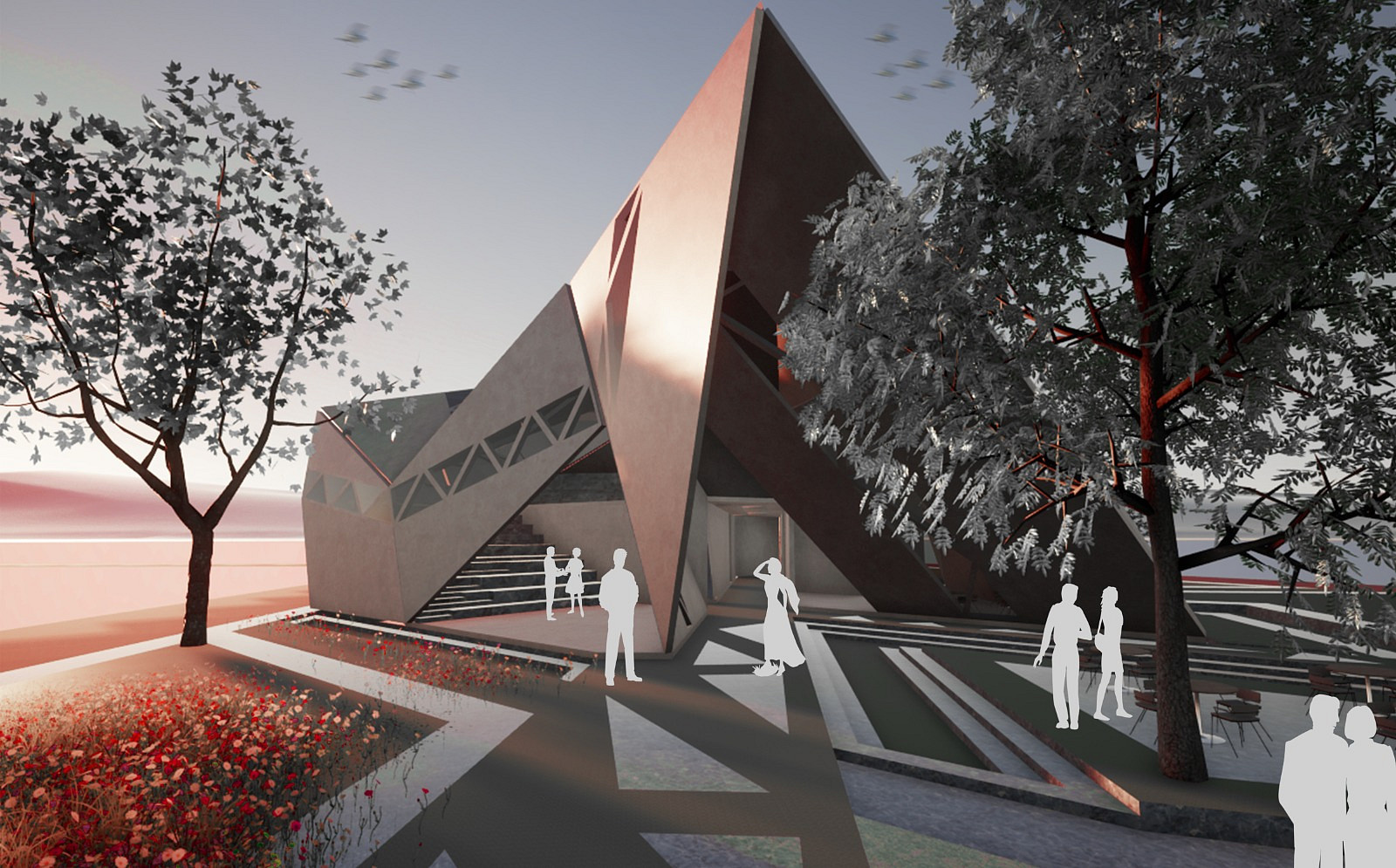
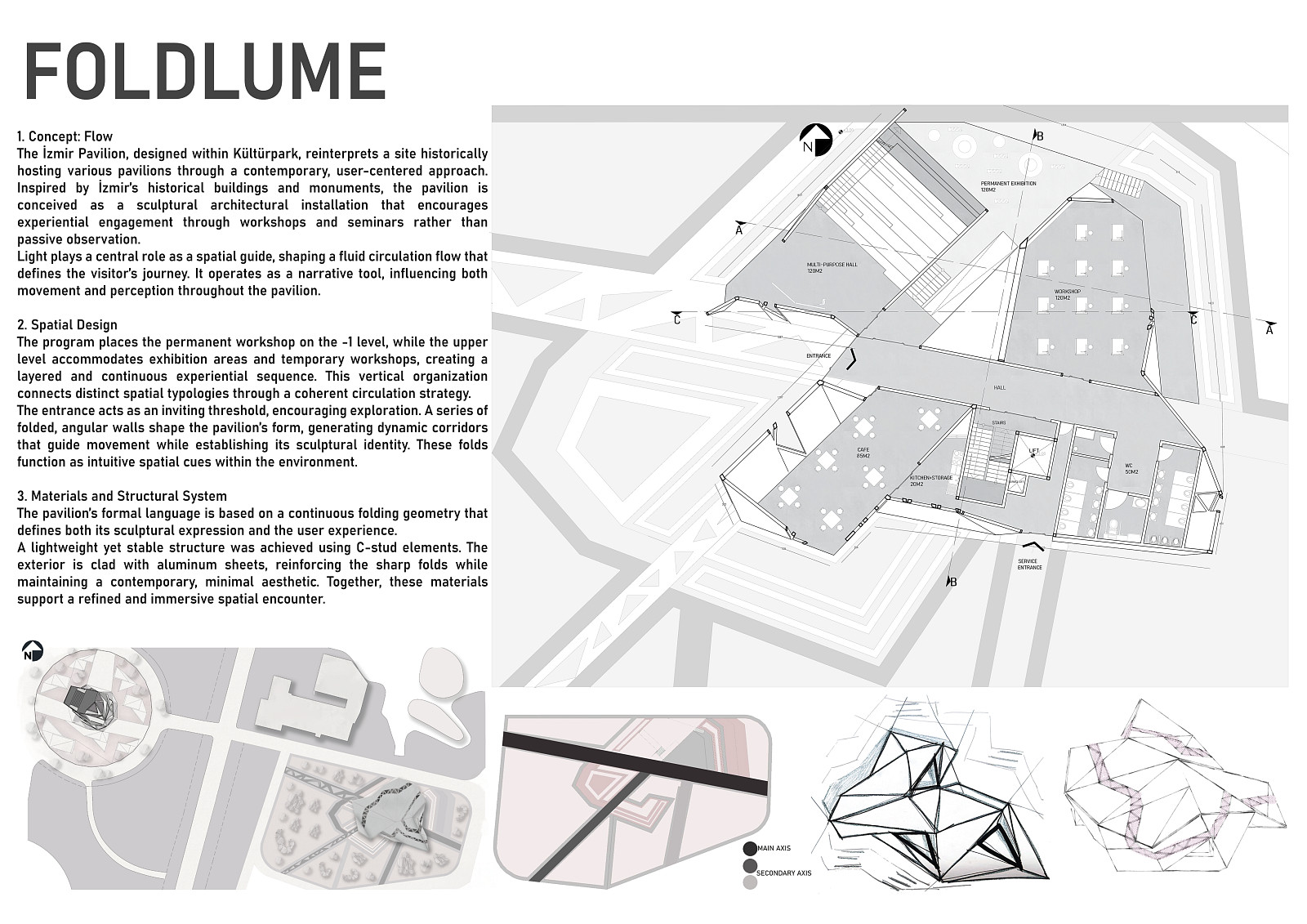
The primary aim of the studio in designing the İzmir Pavilion within Kültürpark was to reinterpret an area that has historically hosted various pavilions by developing a user centered contemporary structure. Drawing inspiration from İzmir’s historical buildings and monuments, the pavilion was conceived as a sculptural architectural installation that invites visitors not only to observe the space but also to engage with it experientially through workshops and seminars.
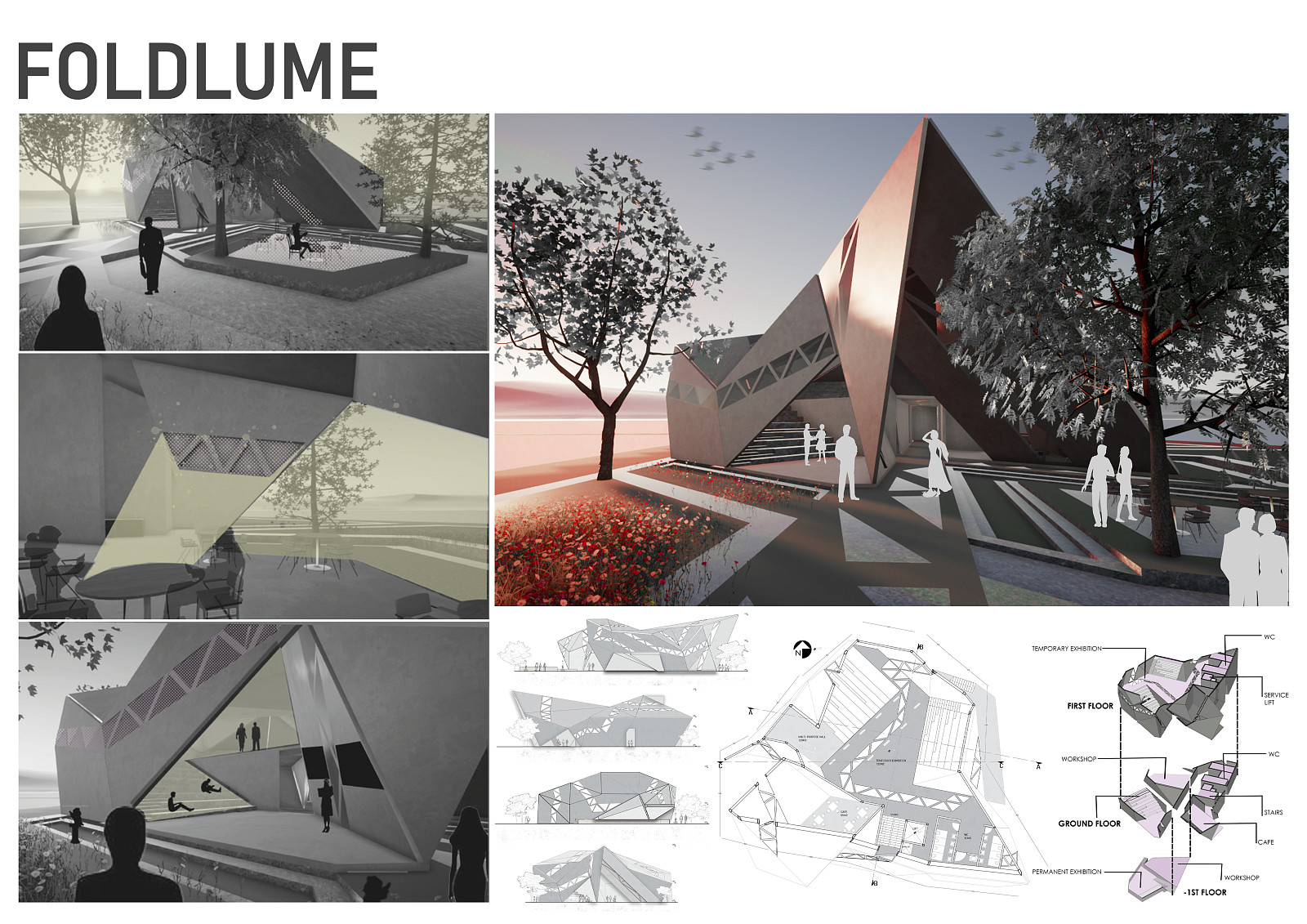
In the conceptual phase, I focused on the use of light as a spatial guide, creating a fluid circulation flow that defines the visitor’s experiential journey. Light becomes a narrative tool, shaping both movement and perception throughout the pavilion.
Spatial Design:
The programmatic organization positions the permanent workshop on the -1 level, while the upper level accommodates exhibition areas and temporary workshops, allowing for a layered and continuous experiential sequence. This vertical arrangement enhances user engagement by offering distinct spatial typologies connected through a coherent circulation strategy.
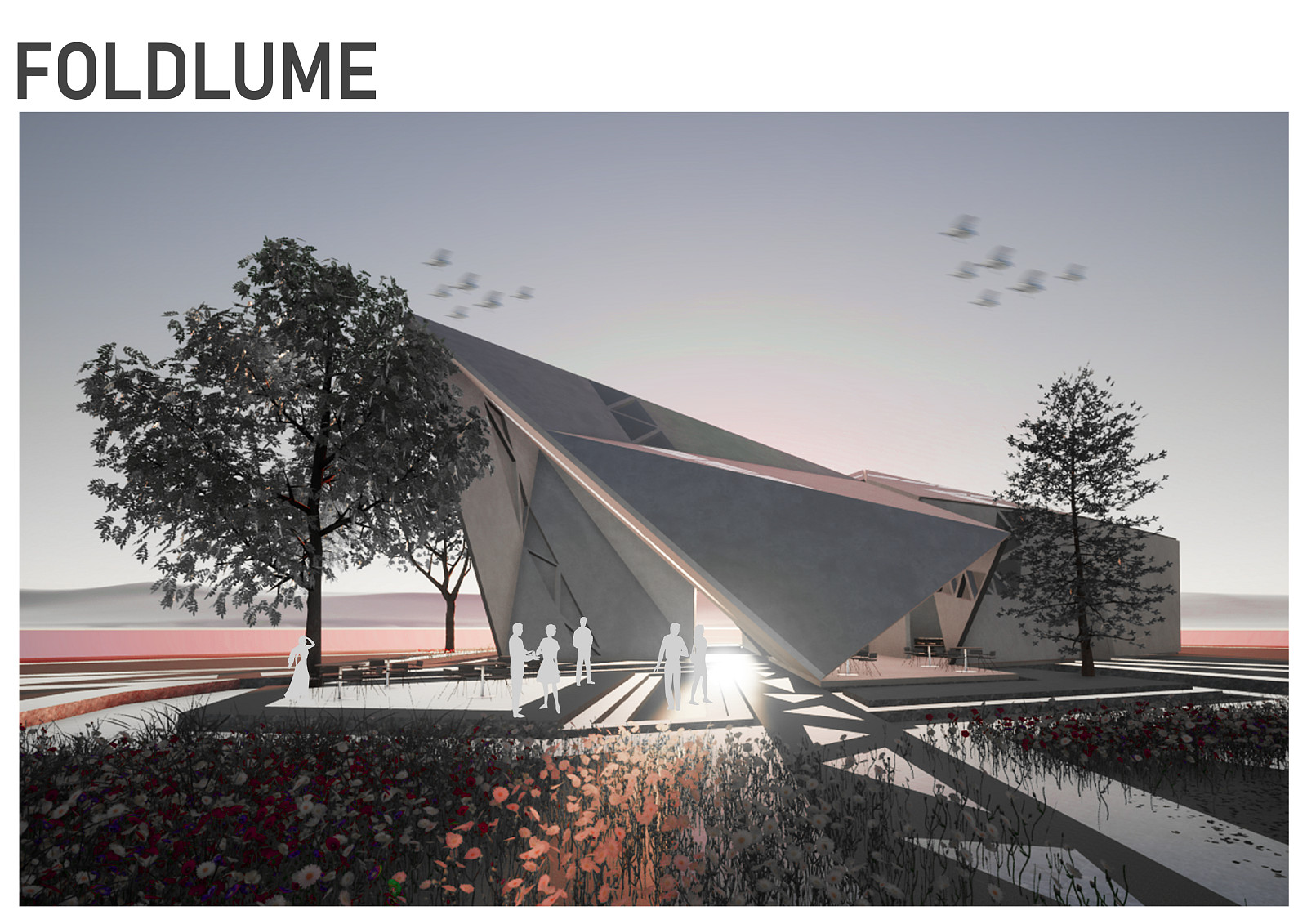
The entrance is intentionally designed as a welcoming and inviting threshold, encouraging visitors to enter and explore. The form of the pavilion is shaped by a series of folded, angular walls, creating dynamic spatial corridors that both guide movement and establish the pavilion’s sculptural identity. These folds function as spatial cues, directing users intuitively through the environment.
Technické informace
Materials and Structural System:
The formal language of the pavilion is rooted in the idea of a continuous folding structure. This fold geometry not only generates the sculptural expression of the building but also frames the user’s spatial experience.
For the structural system, C-stud elements were utilized to achieve a lightweight yet stable framework. The surfaces and exterior envelope were clad with aluminum sheets, chosen for their ability to reinforce the sharp, clean folds of the design while maintaining a contemporary and minimal aesthetic. The combination of these materials supports the pavilion’s goal of creating a refined yet immersive spatial encounter.

Copyright © 2026 INSPIRELI | All rights reserved. Use of this website signifies your agreement to the Terms of Use, Privacy Policy, and use of cookies.
