DAKKHINDIHI RABINDRA COMPLEX


Idea projektu
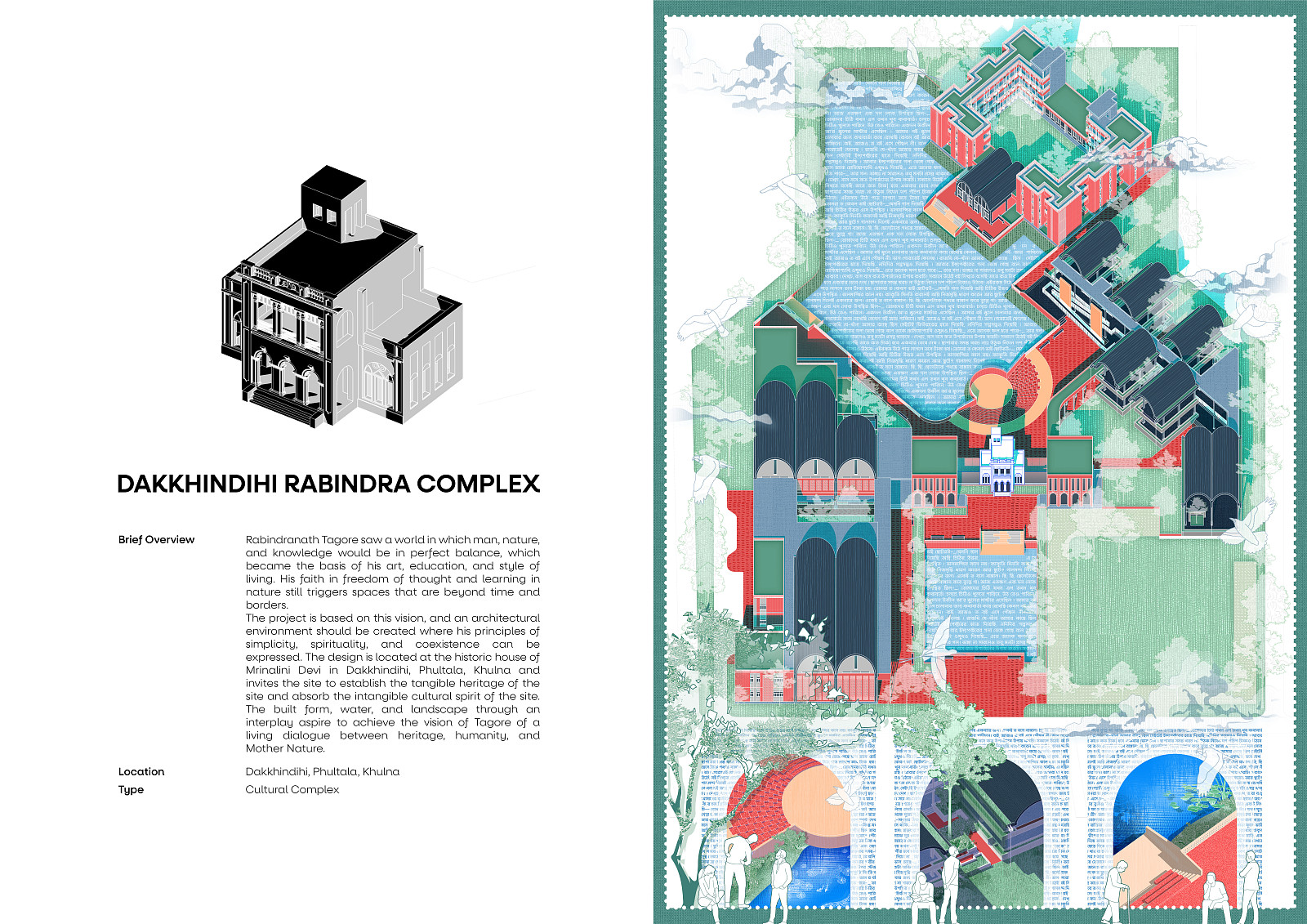
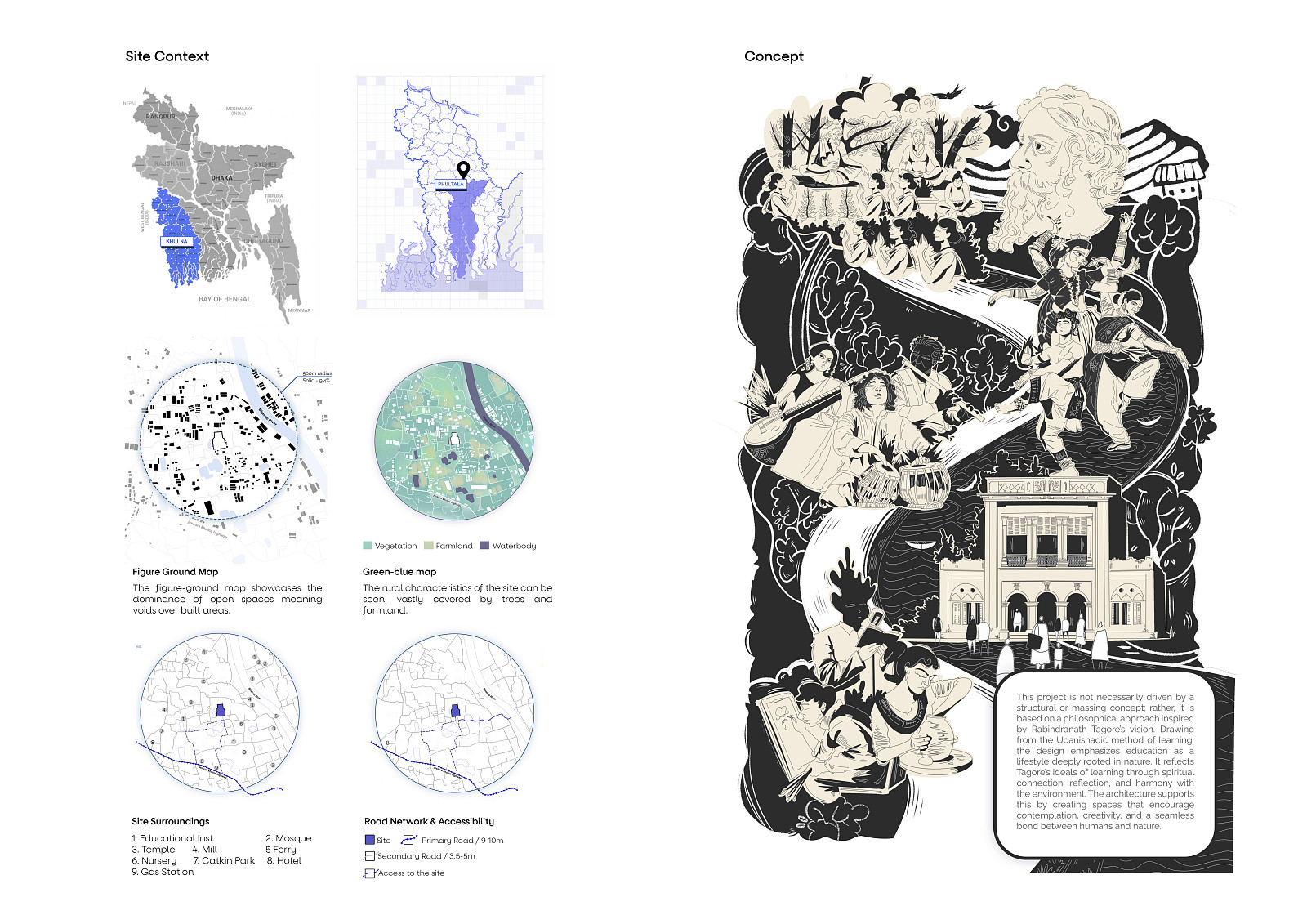
Dakkhindihi Rabindra Complex is a site-sensitive architectural proposal developed in response to the historic residence of Mrinalini Devi, wife of Rabindranath Tagore, at Dakkhindihi, Phultala, Khulna. The project is rooted in the cultural and philosophical legacy of Rabindranath Tagore (1861–1941), a Nobel Laureate poet, philosopher, educator, and cultural reformer whose contributions significantly shaped Bengali literature, art, education, and national identity. His vision of harmony between humanity, nature, and learning continues to influence cultural and educational thought across South Asia and beyond.
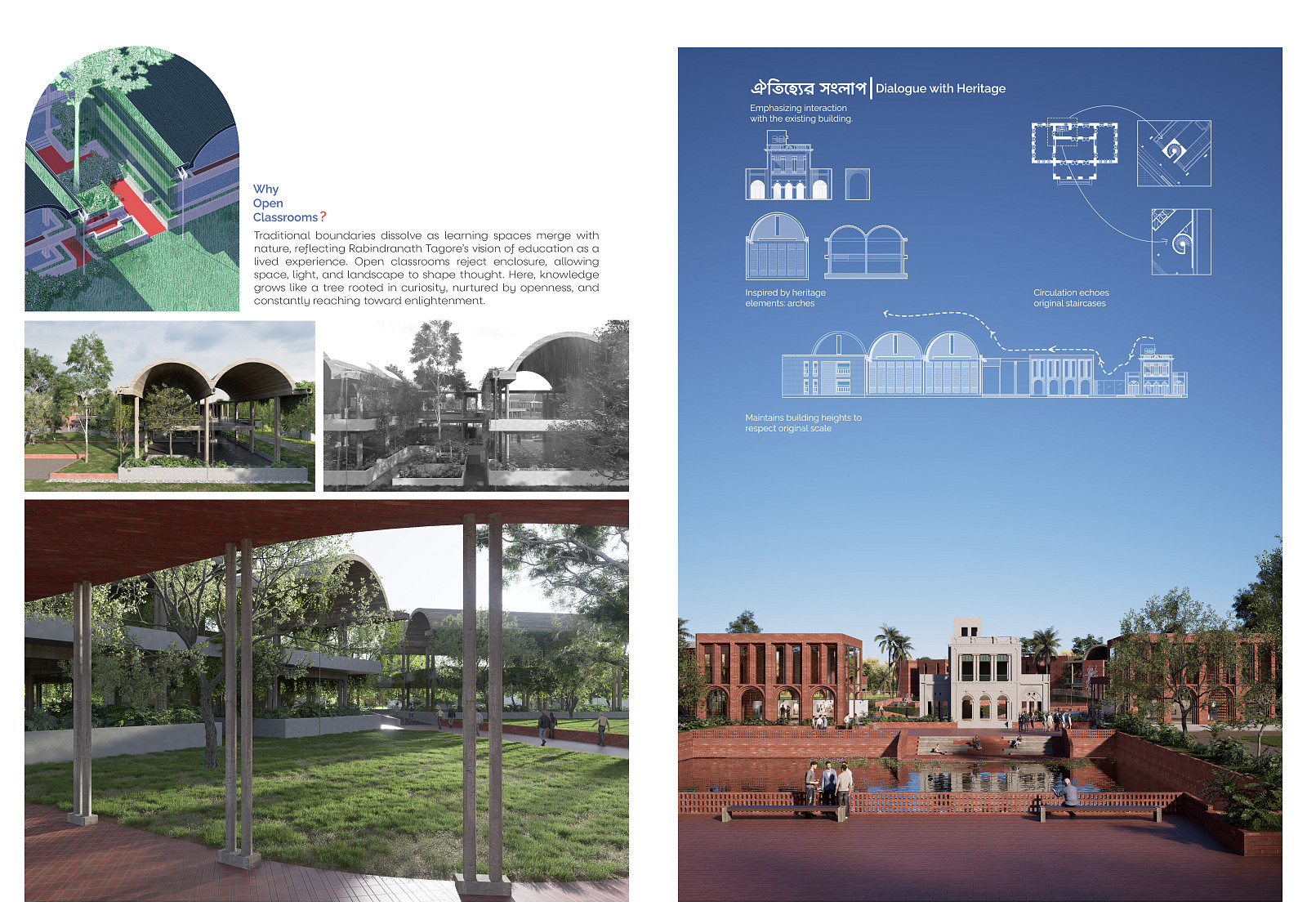
The primary objective of this project is to preserve and respect the tangible heritage of the existing 19th-century structure while revitalizing the site as a cultural and educational complex. The proposal emphasizes contextual design, environmental integration, and spatial continuity, ensuring that new interventions establish a meaningful dialogue with the historic fabric rather than overpowering it.
Through careful planning and landscape integration, the project aspires to create an environment that reflects Tagore’s ideals, where knowledge is not confined within rigid boundaries but grows organically within nature. The design seeks to translate his philosophical and educational principles into spatial experience, fostering cultural engagement, reflection, and community participation.
This project represents an academic exploration of heritage-sensitive architecture and demonstrates how contemporary design can respectfully bridge history and modernity while sustaining cultural memory and identity.
Popis projektu
The primary purpose of this project was to reinterpret Dakkhindihi as a living cultural landscape rather than treating it as a static heritage monument. Although historically associated with Rabindranath Tagore through the residence of Mrinalini Devi, the site lacked structured cultural programming, conservation-sensitive development, and architectural articulation capable of sustaining both tangible and intangible heritage. The project, therefore, aimed to transform the site into an active cultural complex that embodies Tagore’s philosophy of harmony between human life, nature, and knowledge.
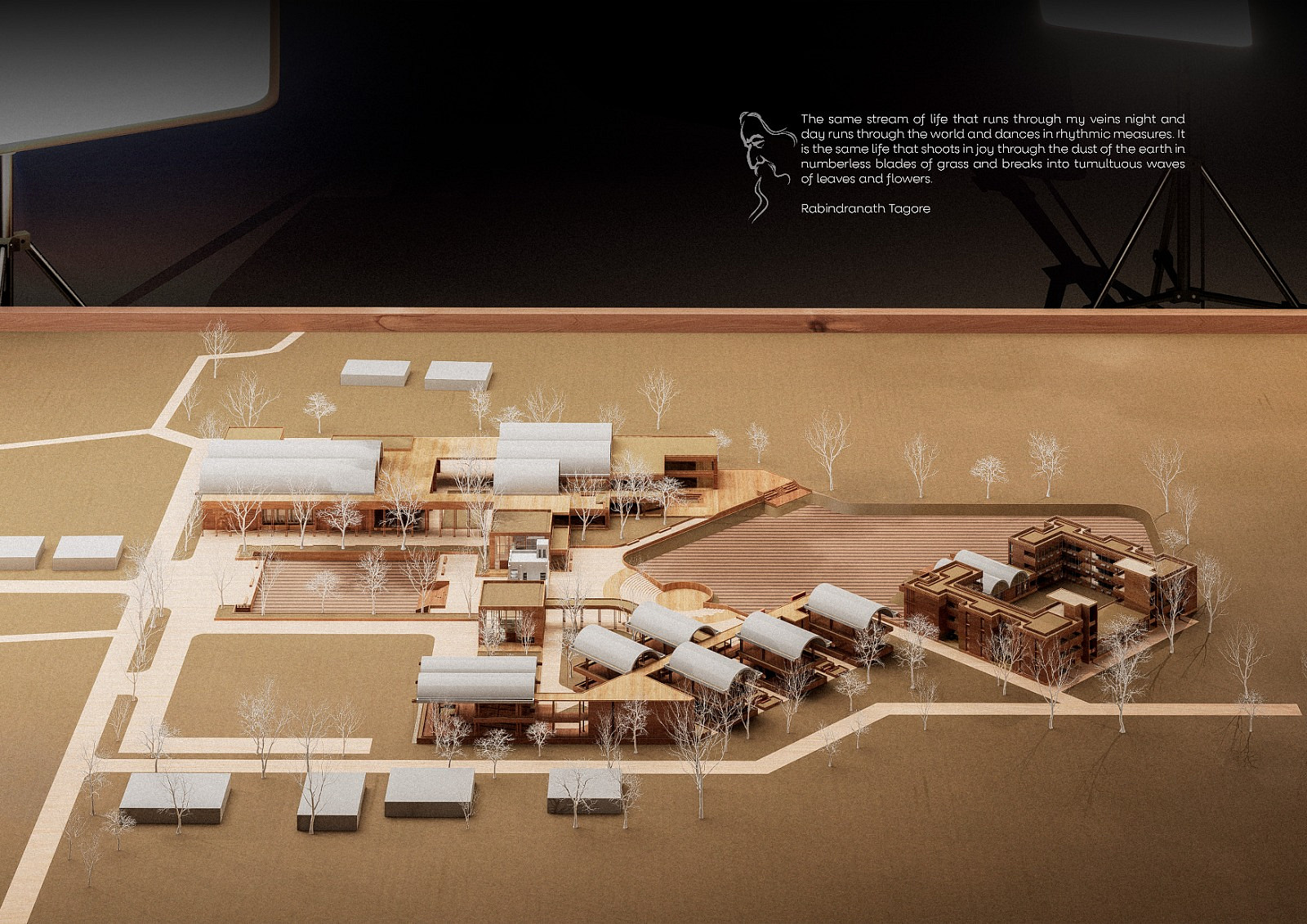
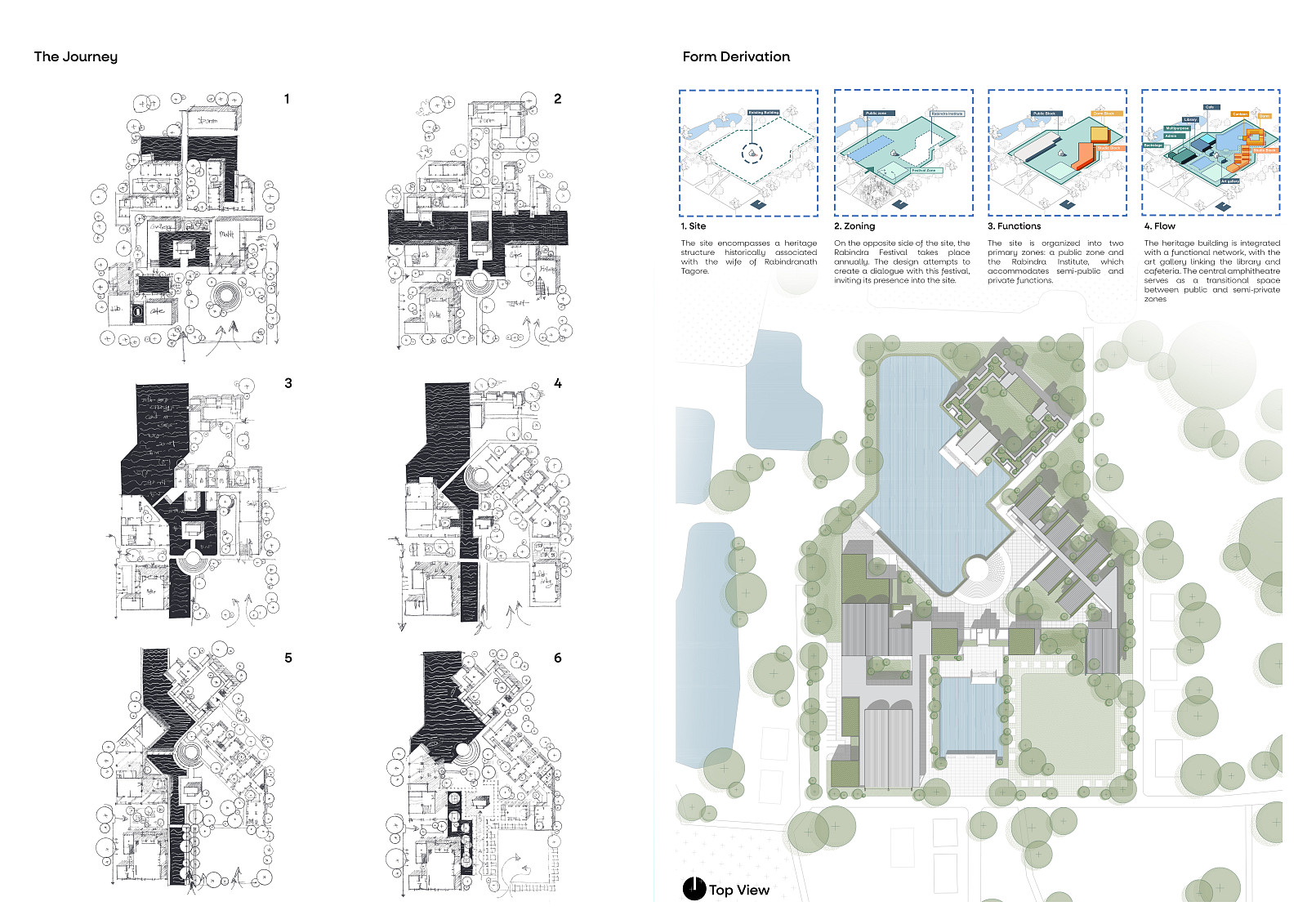
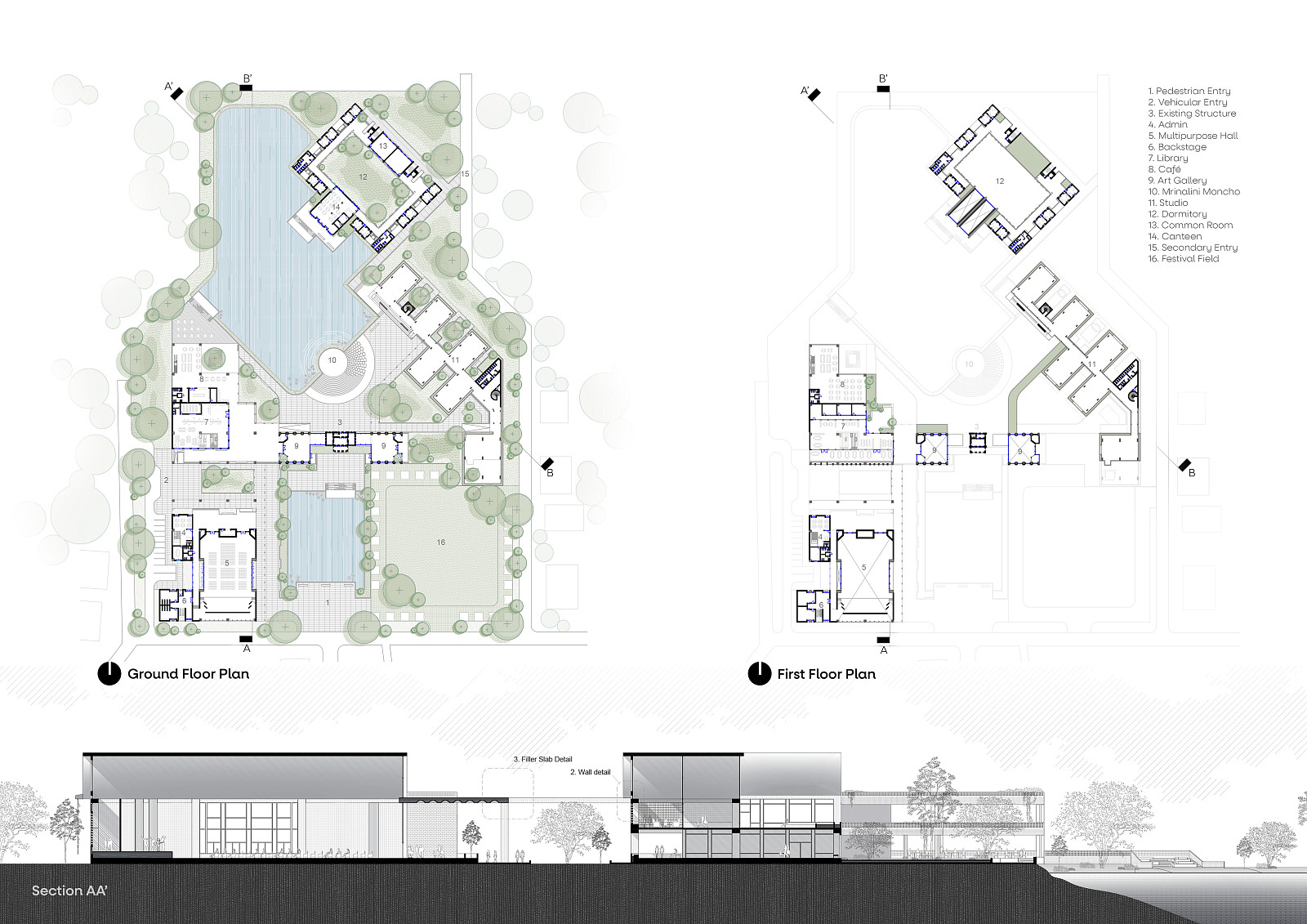
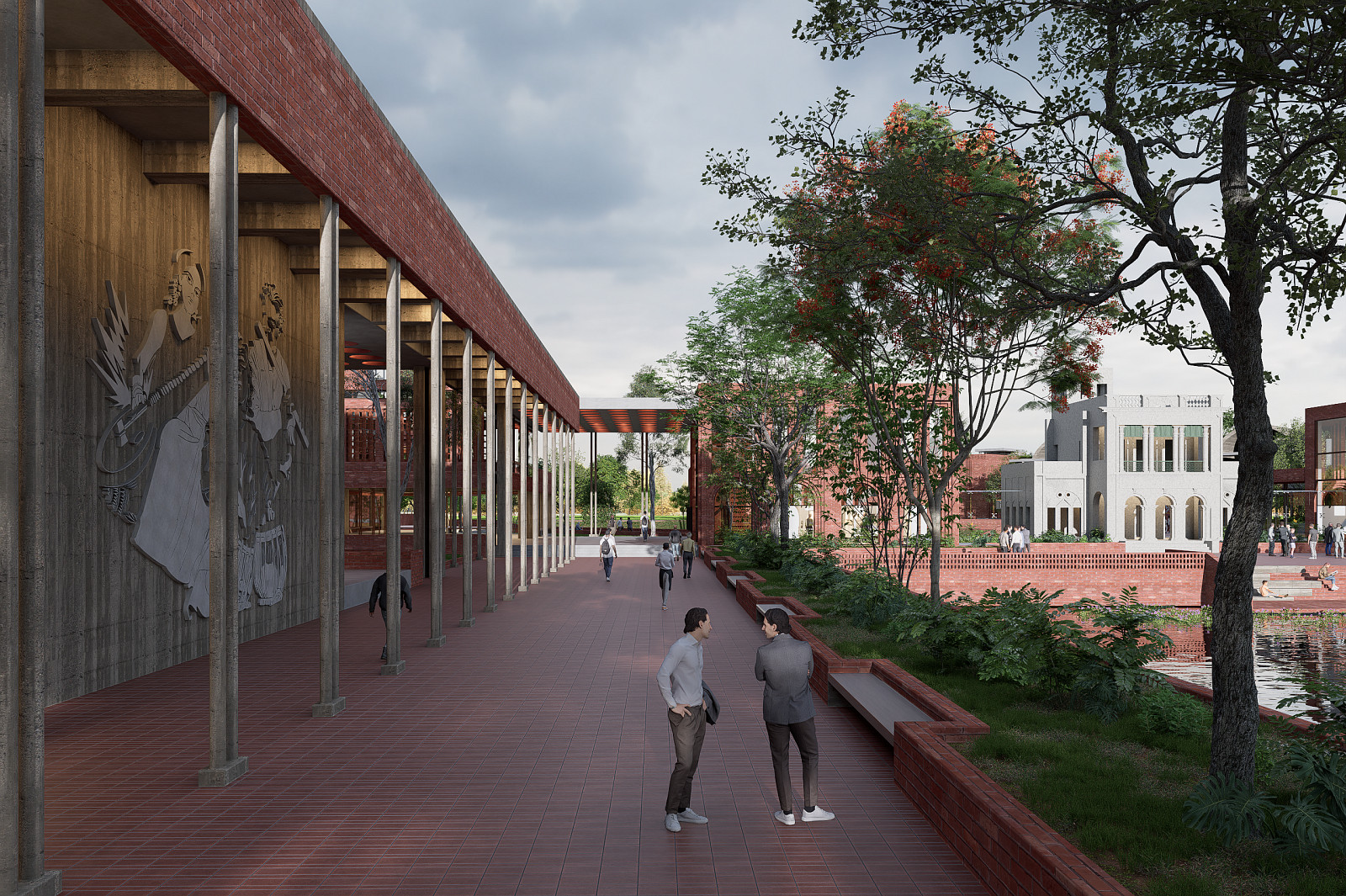
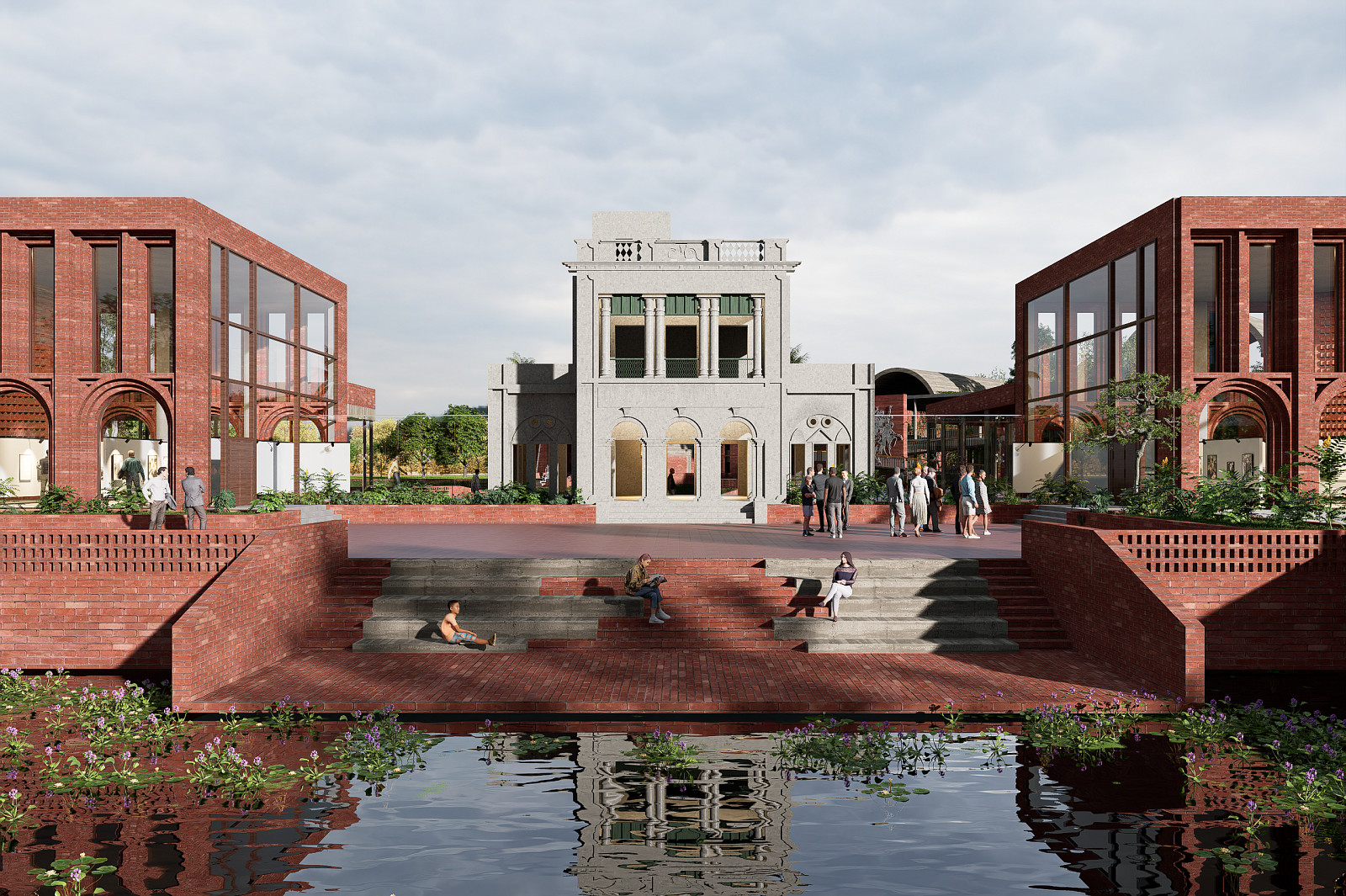
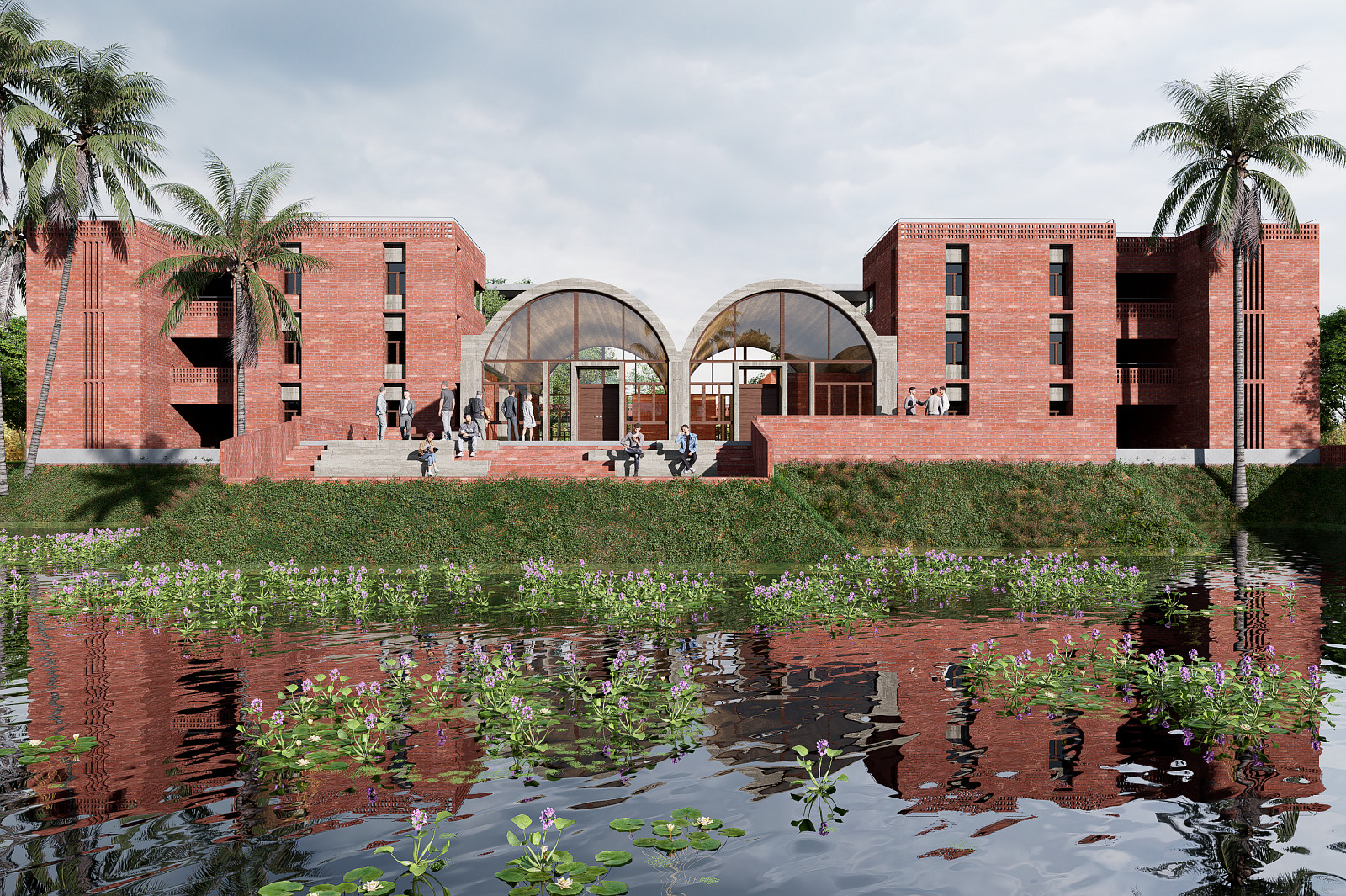
The design solution was developed through a site-sensitive and research-driven process. The existing nineteenth-century residence was retained as the focal anchor of the masterplan, around which new interventions were carefully organized. Zoning was structured into three primary domains: public, festival, and institutional/private to ensure functional clarity while maintaining spatial continuity. The festival zone was strategically positioned to extend from the existing open field, allowing seasonal cultural events to expand organically into the site. The Rabindra Institute, including dormitory and studio spaces, was placed toward the rear of the site to maintain privacy and minimize disturbance from public activities.
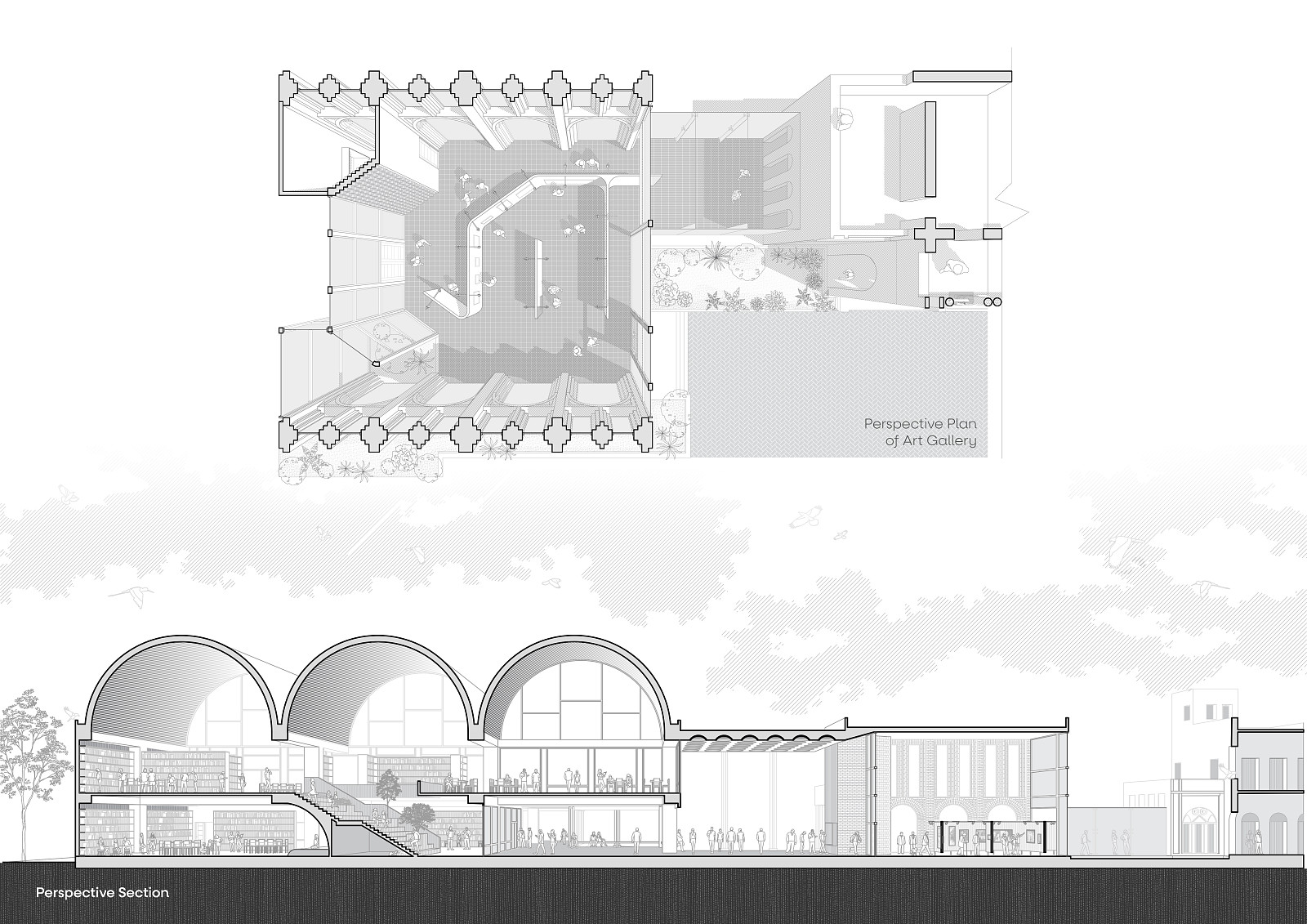
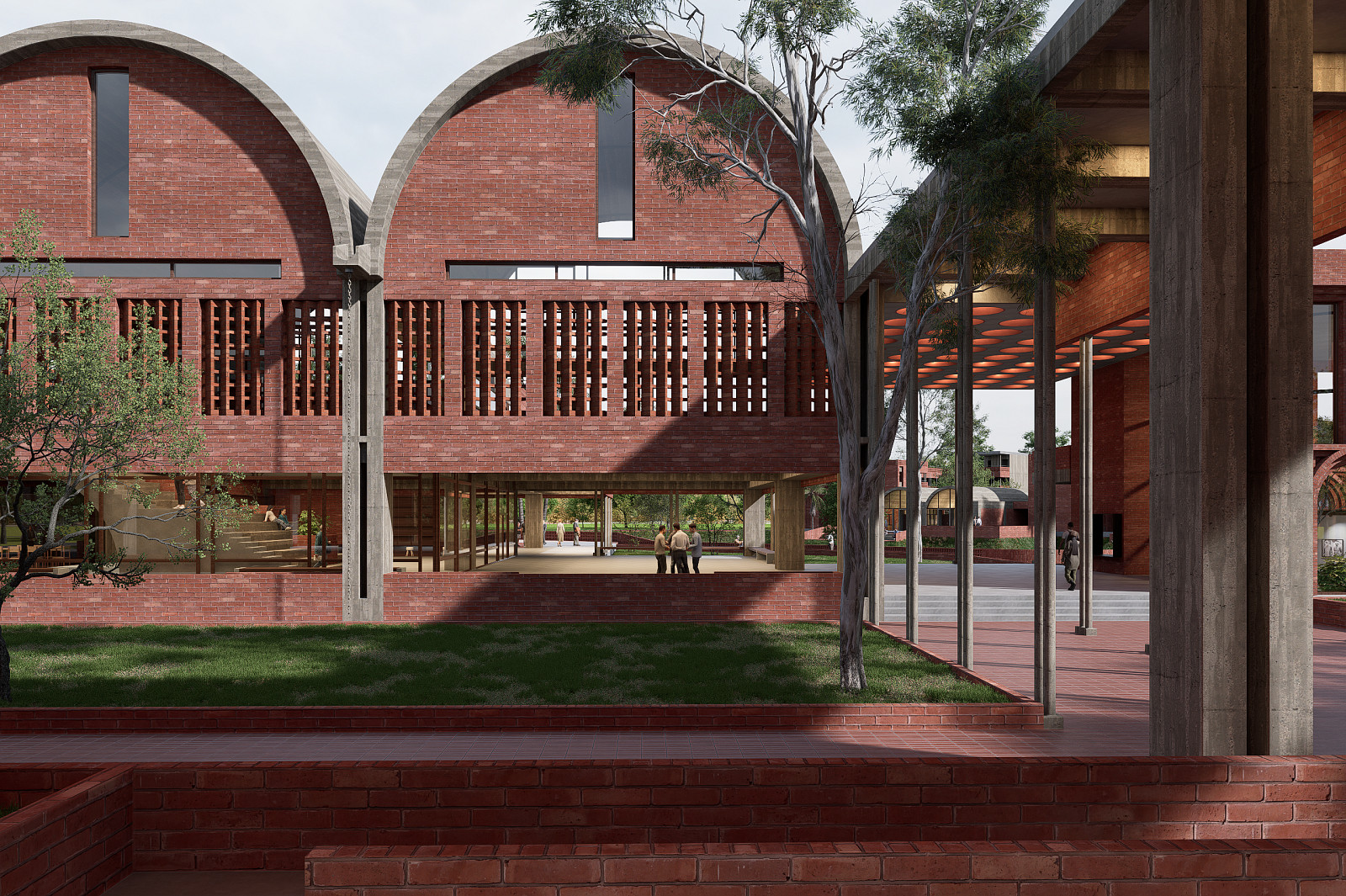
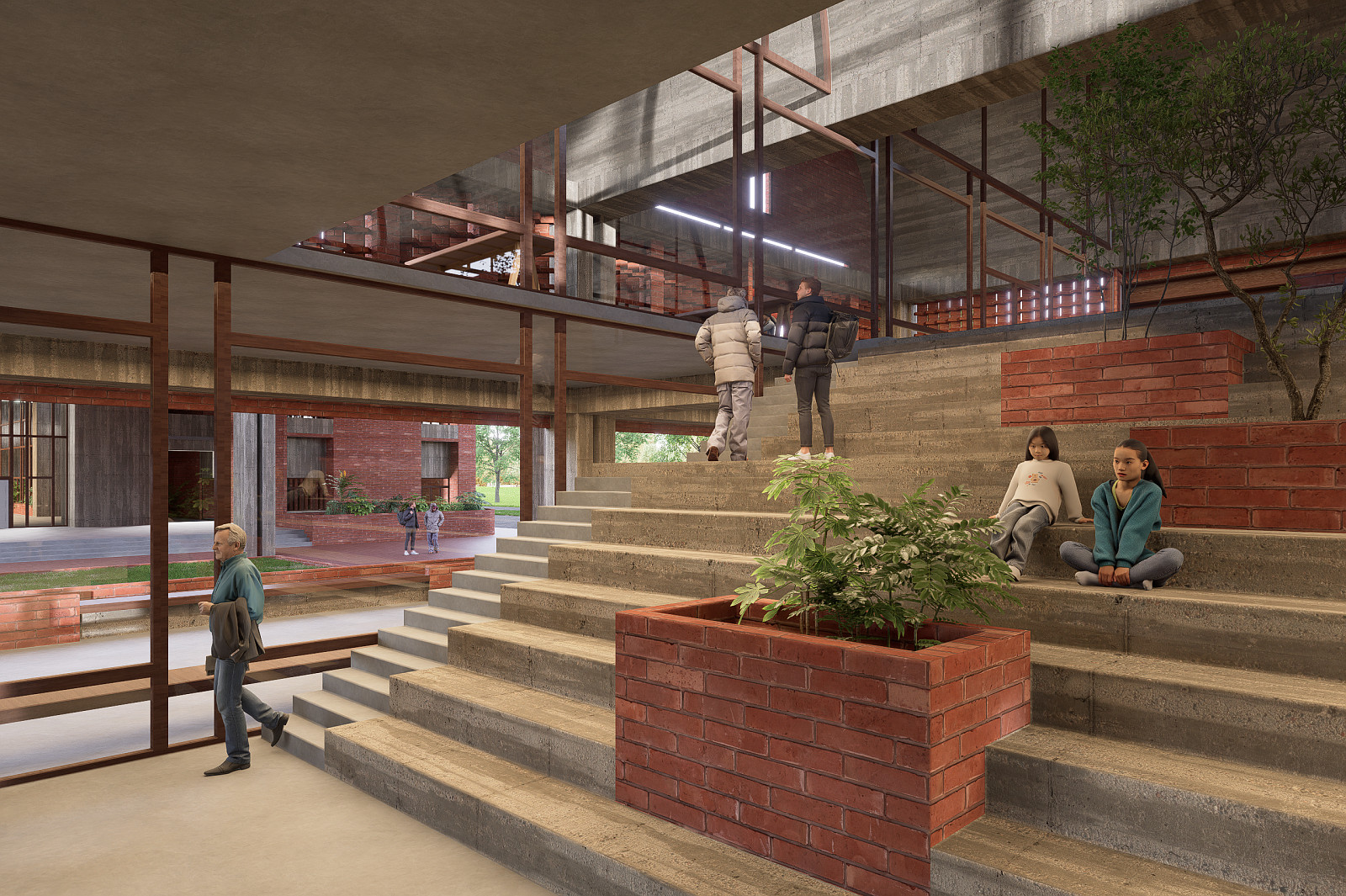
Key considerations included climatic responsiveness (orientation, shading, cross-ventilation), preservation of existing water bodies and vegetation, landscape integration, and scale sensitivity toward the heritage structure. Open classrooms were introduced to reflect Tagore’s educational philosophy that knowledge transcends enclosure and grows in dialogue with nature. Architectural language was intentionally restrained, emphasizing permeability, transitional spaces, and material harmony rather than formal dominance.
Thus, the project resolves the tension between conservation and contemporary use by creating a balanced framework where architecture supports cultural continuity, environmental awareness, and community engagement.
Technické informace
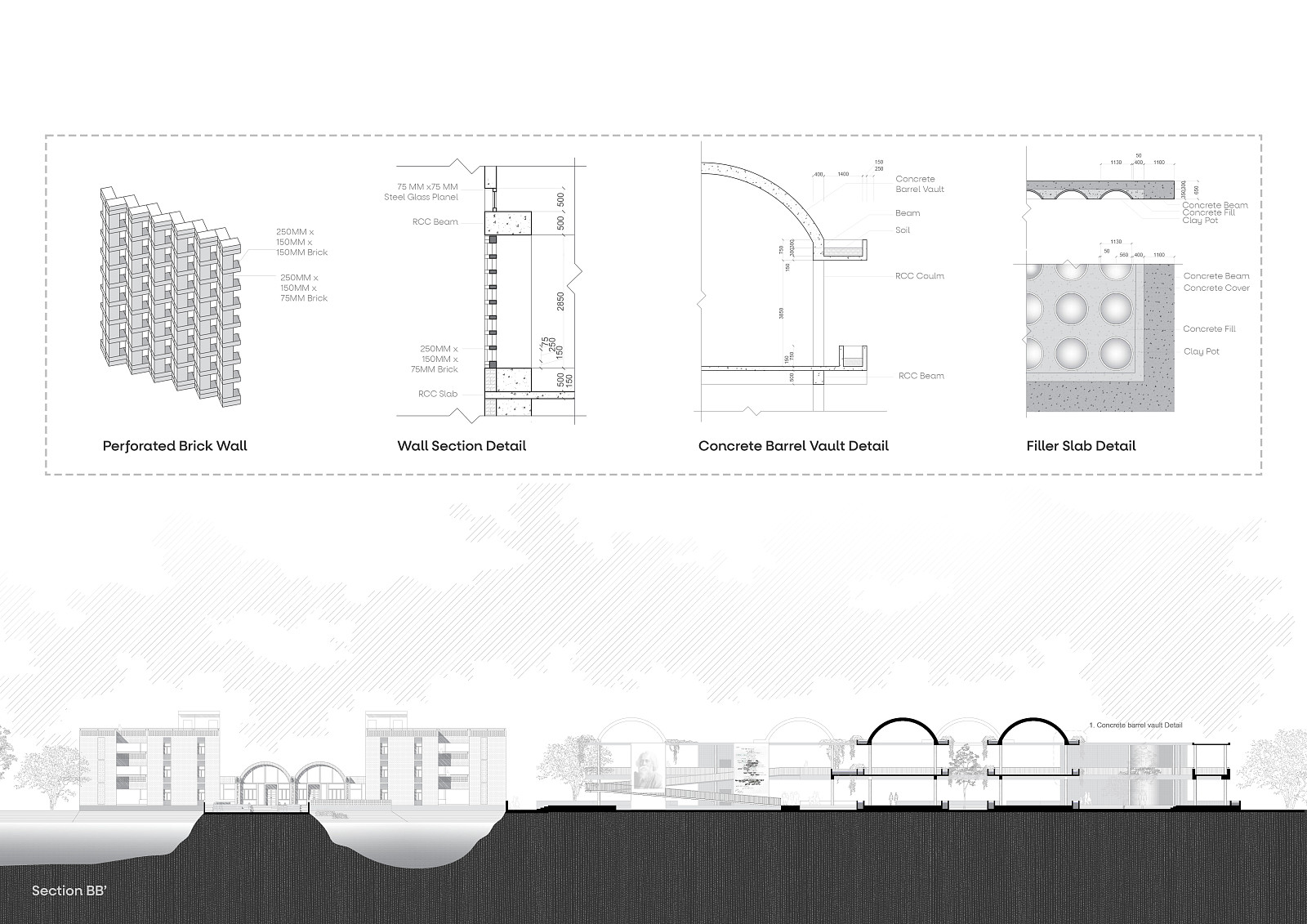
The complex is conceived as a low-rise, climate-responsive development integrated with the preserved nineteenth-century residence. The primary structural system of new interventions consists of reinforced concrete (RCC) framing to ensure durability and seismic stability, with selective use of lightweight steel elements in larger-span semi-open spaces.
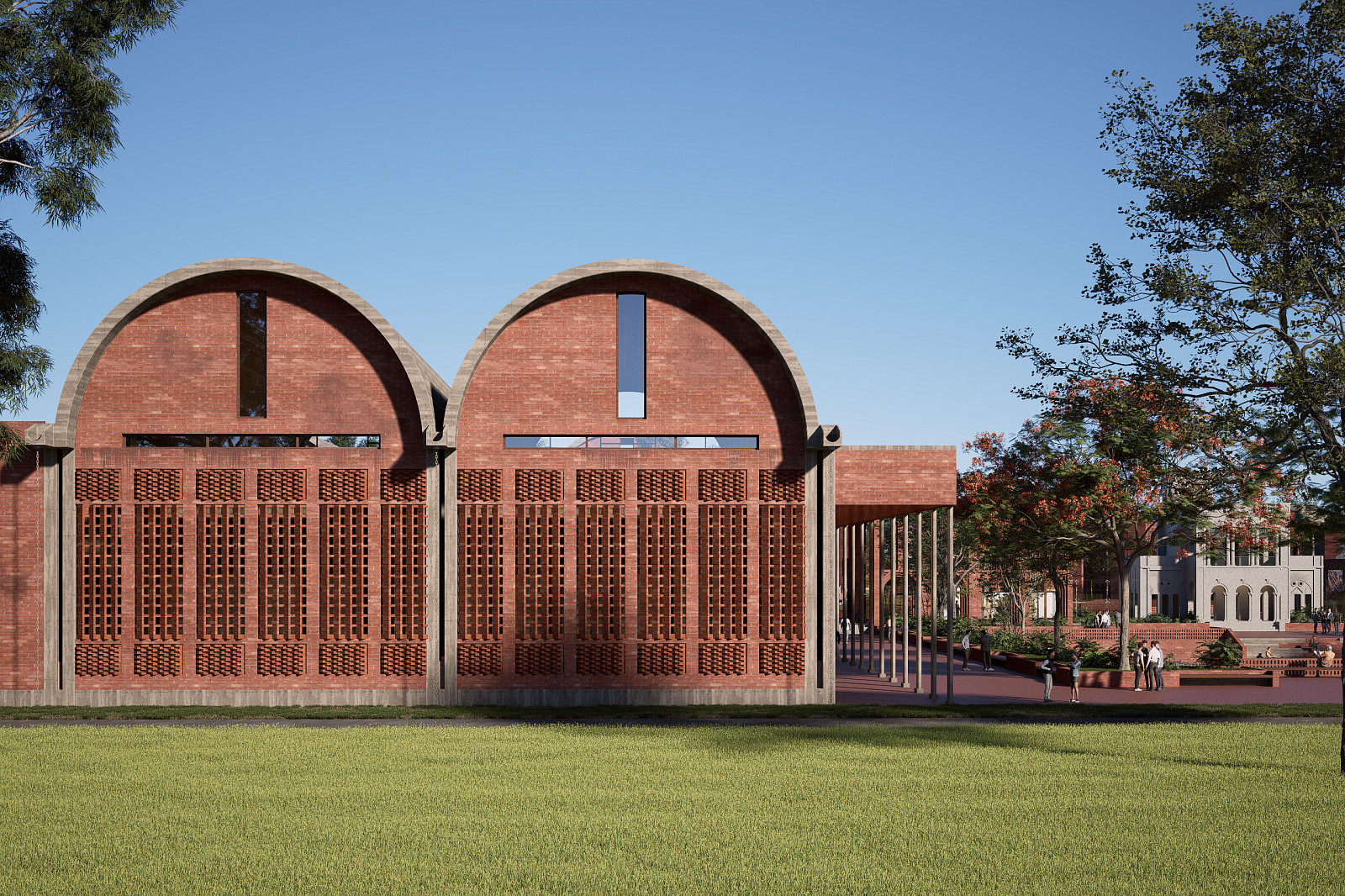
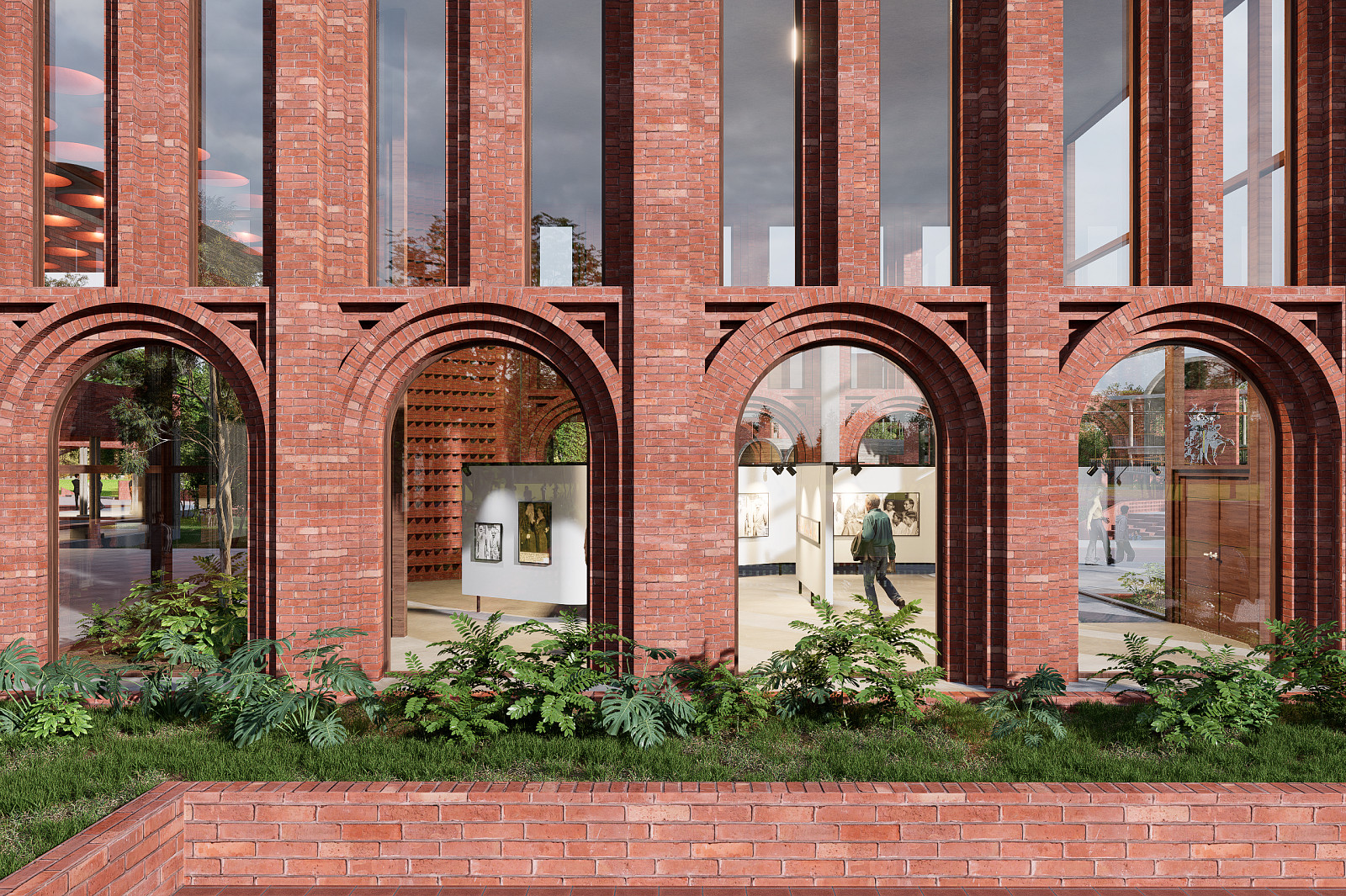
Locally sourced brick has been used as the principal construction material to maintain contextual continuity and support regional craftsmanship. Perforated brick walls (jali) are incorporated to enhance cross-ventilation, control sunlight penetration, and reduce thermal gain while creating visual permeability. Traditional clay pots are integrated within the ceiling system as a passive cooling strategy to reduce heat absorption and improve indoor thermal comfort.
The design prioritizes deep overhangs, shaded verandahs, and open transitional spaces to respond effectively to the climatic conditions of Khulna. Existing water bodies and vegetation are retained, and permeable landscape surfaces are introduced to support natural drainage.
Overall, the technical strategy balances structural stability, local materiality, climatic responsiveness, and heritage sensitivity to ensure long-term environmental and cultural sustainability.

Copyright © 2026 INSPIRELI | All rights reserved. Use of this website signifies your agreement to the Terms of Use, Privacy Policy, and use of cookies.
