

Revitalising "Haus Westland"


Idea projektu
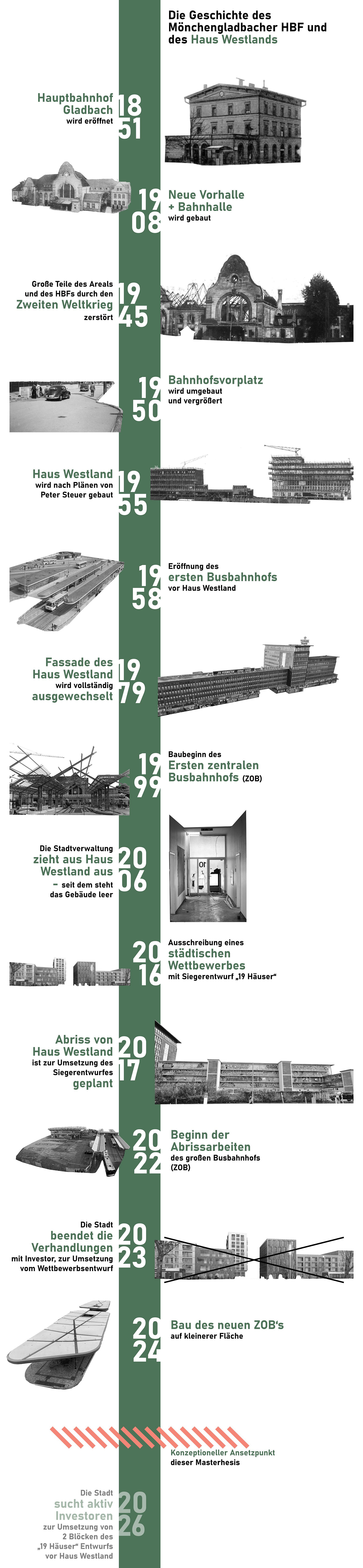
This project investigates the architectural and urban potential of the Haus Westland site located at the main railway station in Mönchengladbach, Germany. The area functions as a major point of arrival to the city and therefore plays a crucial role in shaping the first spatial and social impression for residents, commuters, and visitors alike. Despite its strategic location and historical significance, the site currently suffers from functional decline, fragmented urban structure, and a lack of spatial identity.
The central idea of the project is to reinterpret the station area as an urban threshold – a place that mediates between movement and arrival, between infrastructure and urban life. Instead of understanding the site merely as a transit space, the project aims to transform it into an active and socially integrated part of the city. Particular attention is given to the existing building Haus Westland, whose historical and architectural character forms the conceptual starting point of the design.
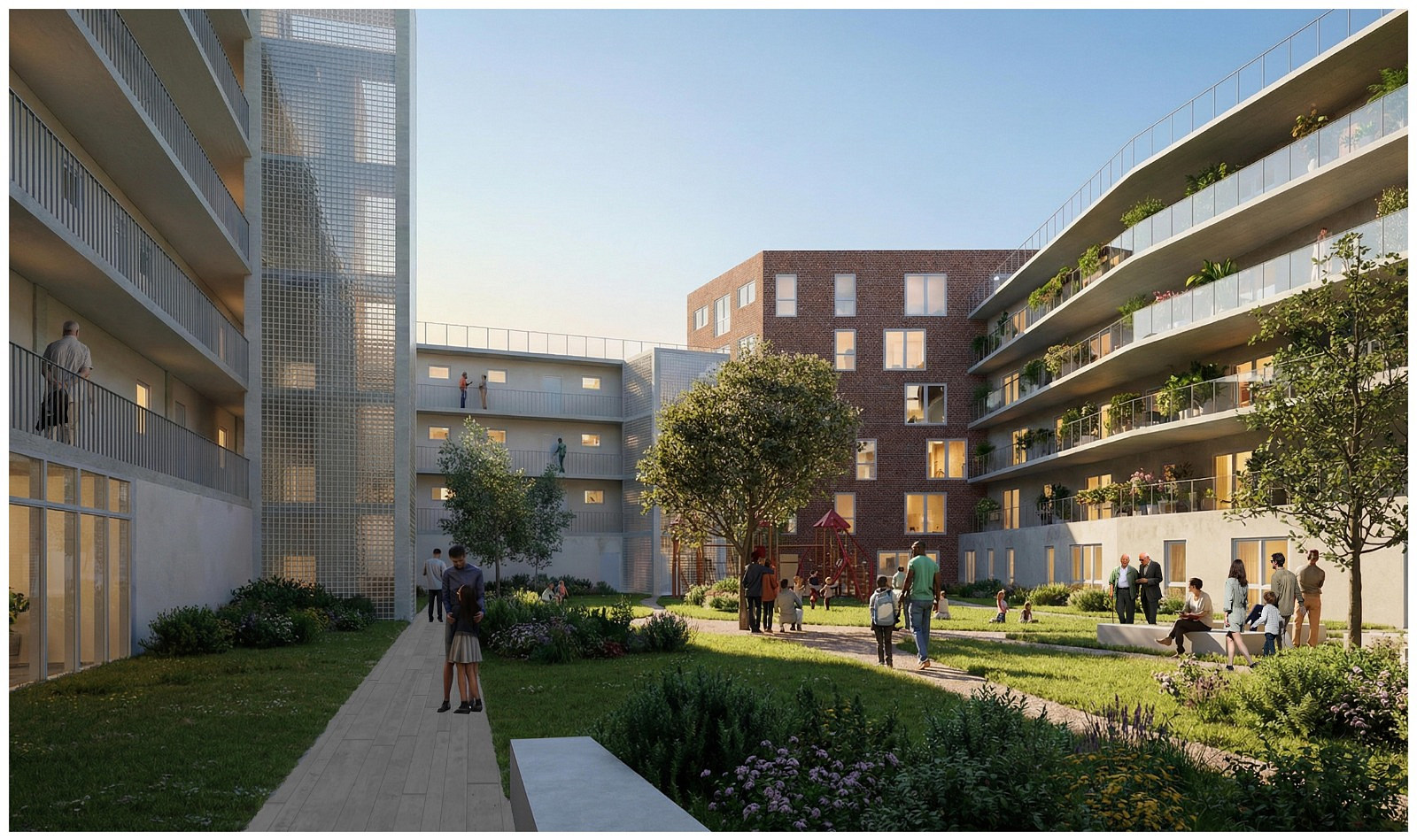
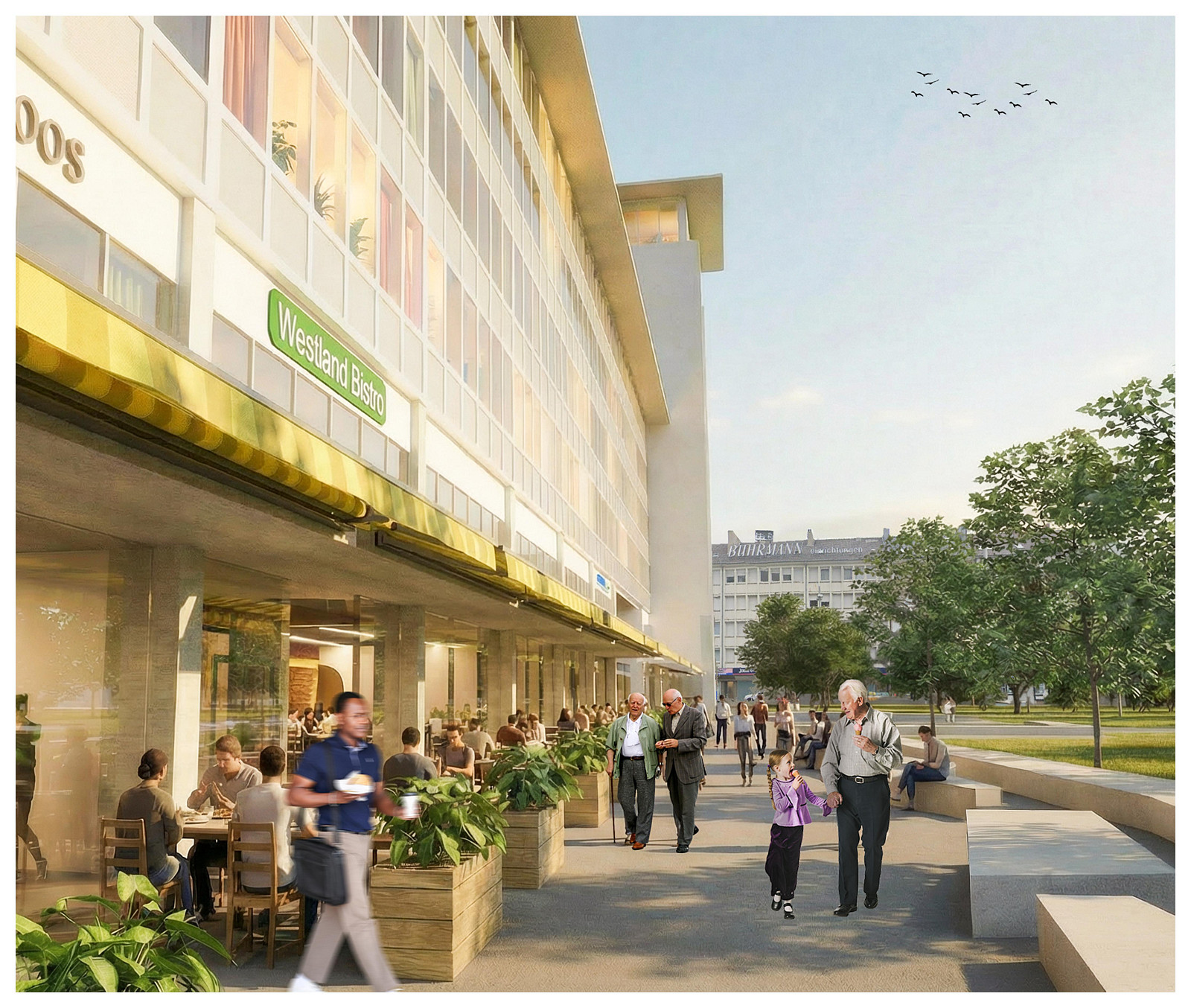
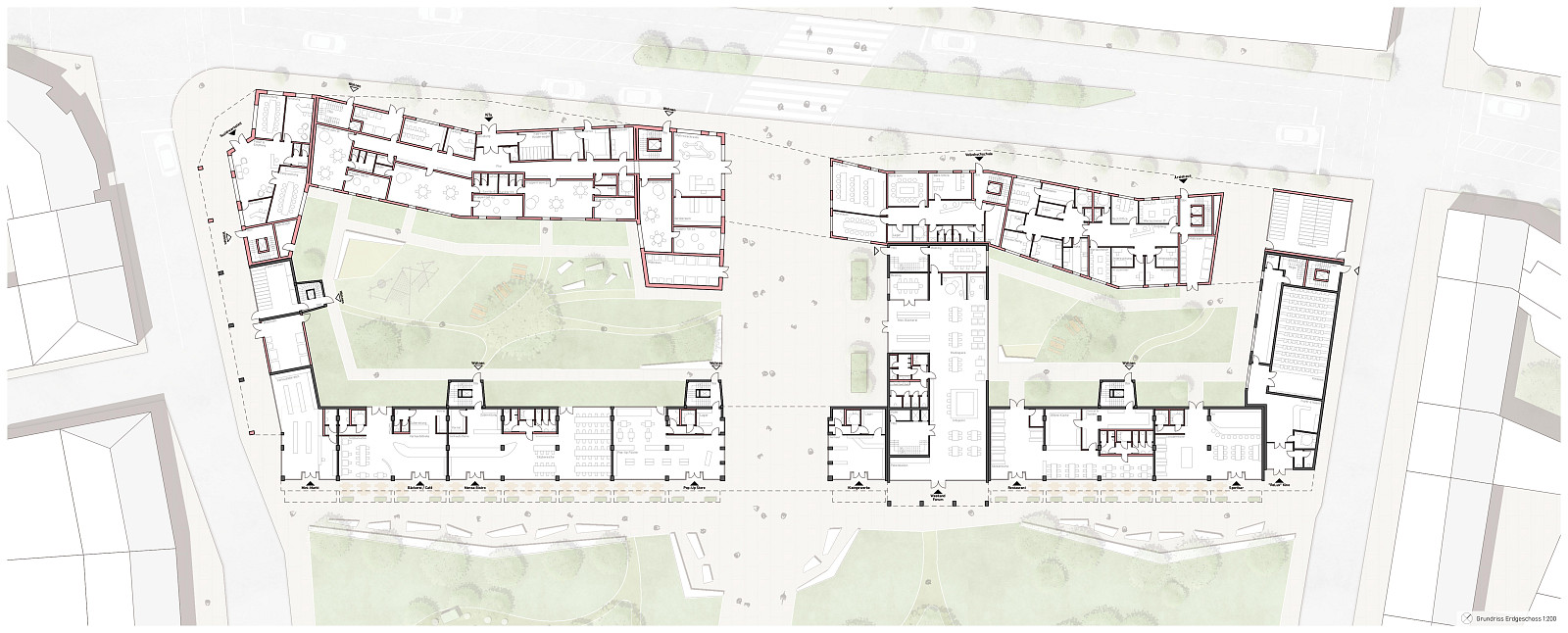
The project explores the possibility of preserving and reactivating the existing structure while complementing it with new architectural interventions. Through a mixed-use program that combines public functions, educational spaces, cultural facilities, and different forms of housing, the proposal seeks to create a vibrant and diverse urban environment. The design strategy aims to activate the ground floor, introduce new spatial connections, and create both open public spaces and more protected communal areas.
On a broader scale, the project addresses questions of urban transformation, adaptive reuse, and the future role of station districts in medium-sized European cities. It proposes a framework in which architecture can contribute not only to functional improvement but also to the creation of identity, orientation, and social interaction.
The objective of the project is therefore not solely the design of a building, but the development of a spatial strategy that strengthens the station area as a welcoming urban entrance and reestablishes Haus Westland as a meaningful and active part of the city's urban fabric.
Popis projektu
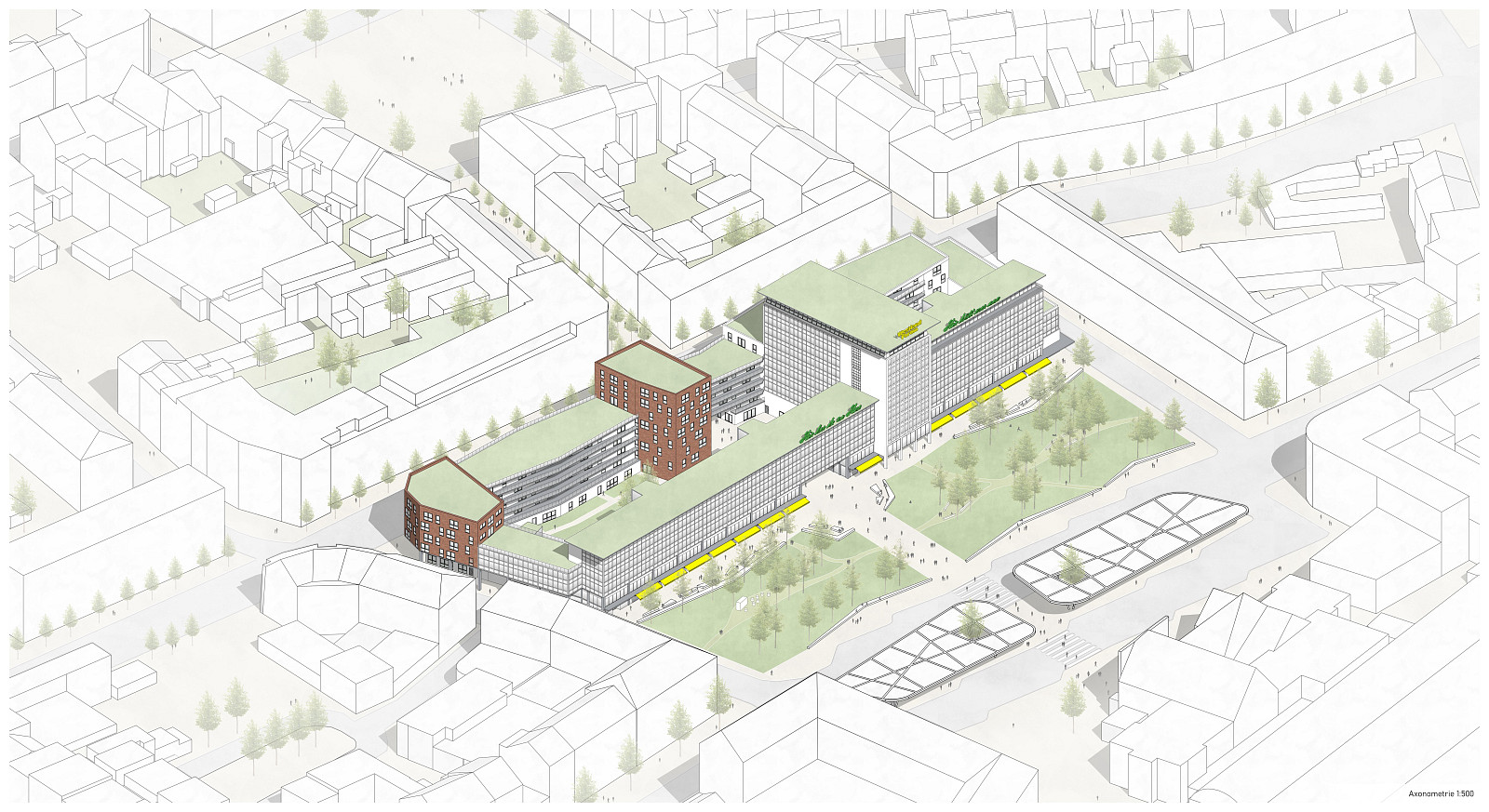
The project proposes an urban and architectural transformation of the area surrounding Haus Westland at the main railway station of Mönchengladbach. The design addresses both the building itself and its wider urban context, recognizing the site as a key point of arrival and a strategic interface between mobility infrastructure and the inner city. The proposal seeks to redefine this location as an active urban threshold that supports movement while also encouraging people to stay, interact, and participate in urban life.
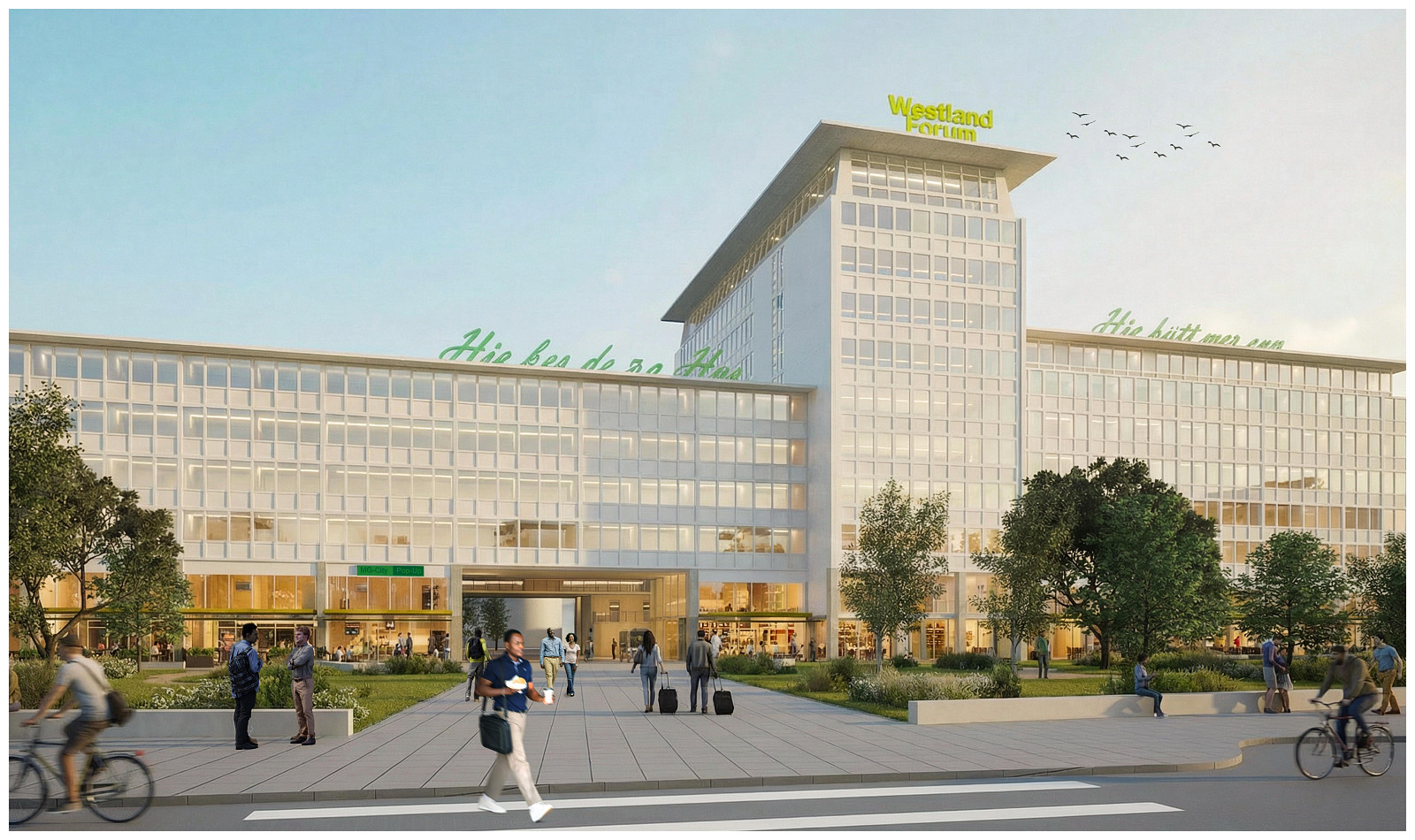
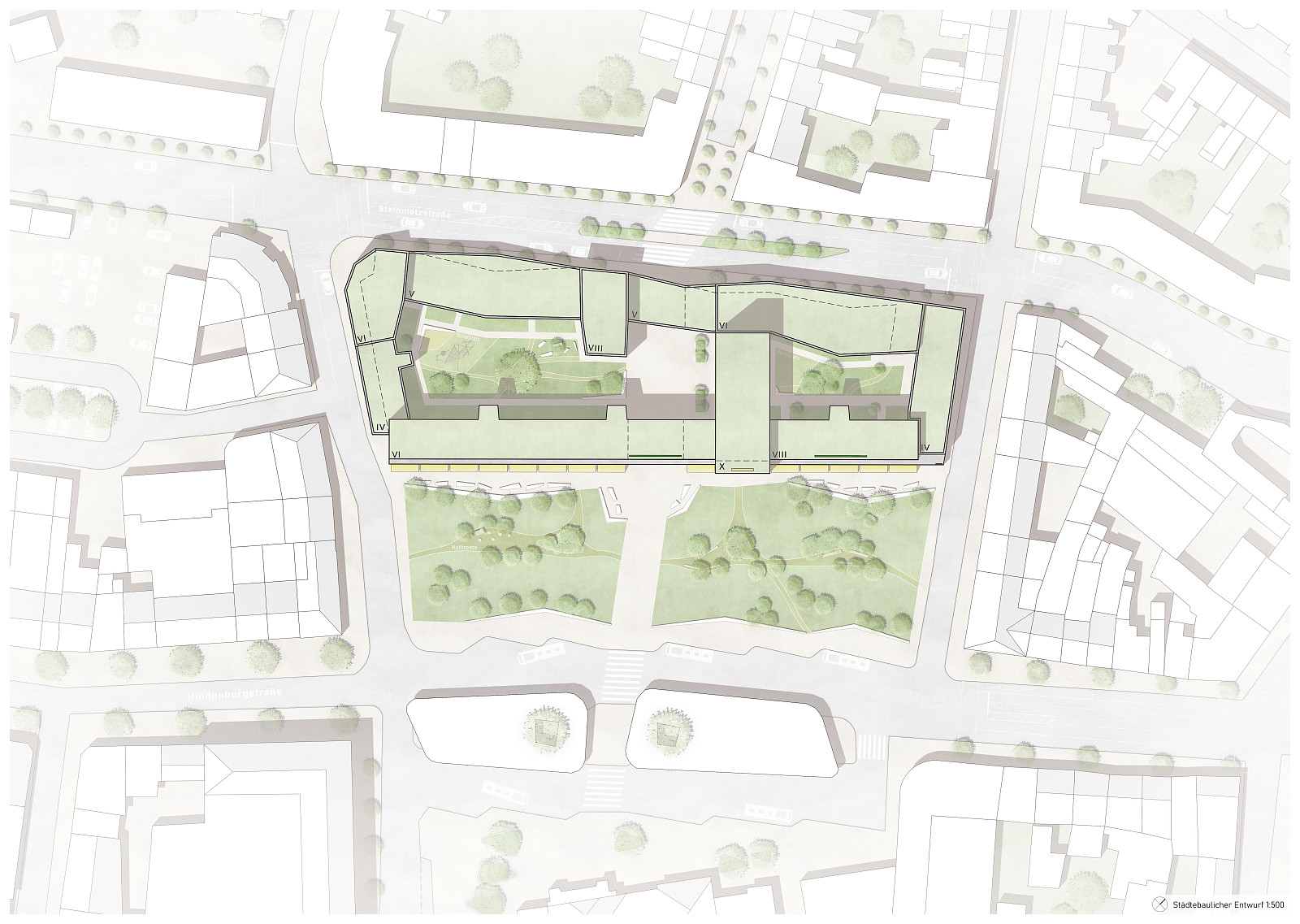
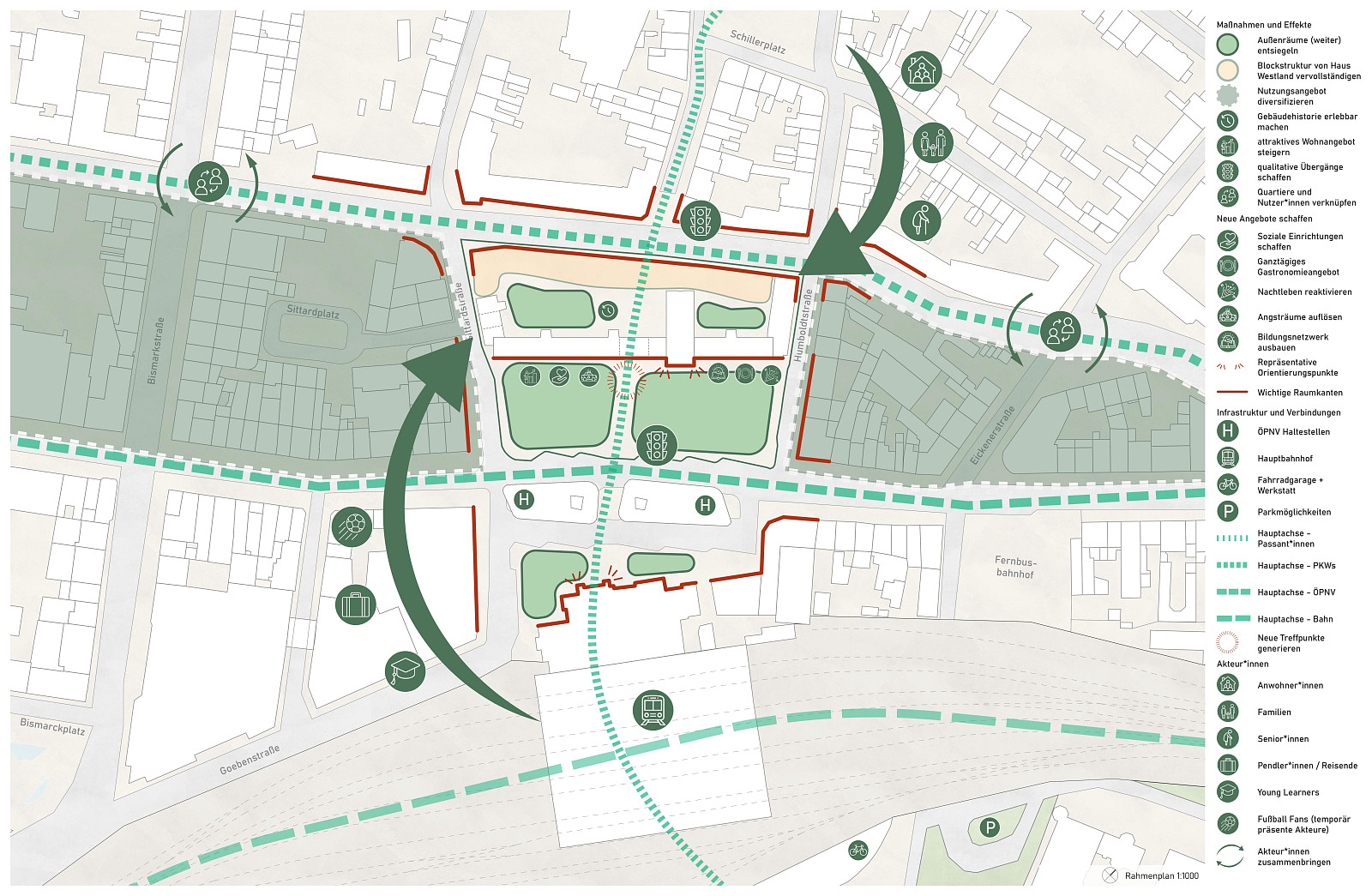
At the urban scale, the project develops a framework plan that strengthens spatial connections between the station, surrounding neighborhoods, and the city center. The strategy focuses on clarifying block structures, improving pedestrian and cycling routes, and transforming currently fragmented or underused spaces into coherent public areas. Particular attention is given to the redesign of the station forecourt, which is conceived as a green and accessible urban plaza that organizes flows of movement while providing areas for rest, meeting, and everyday activities.
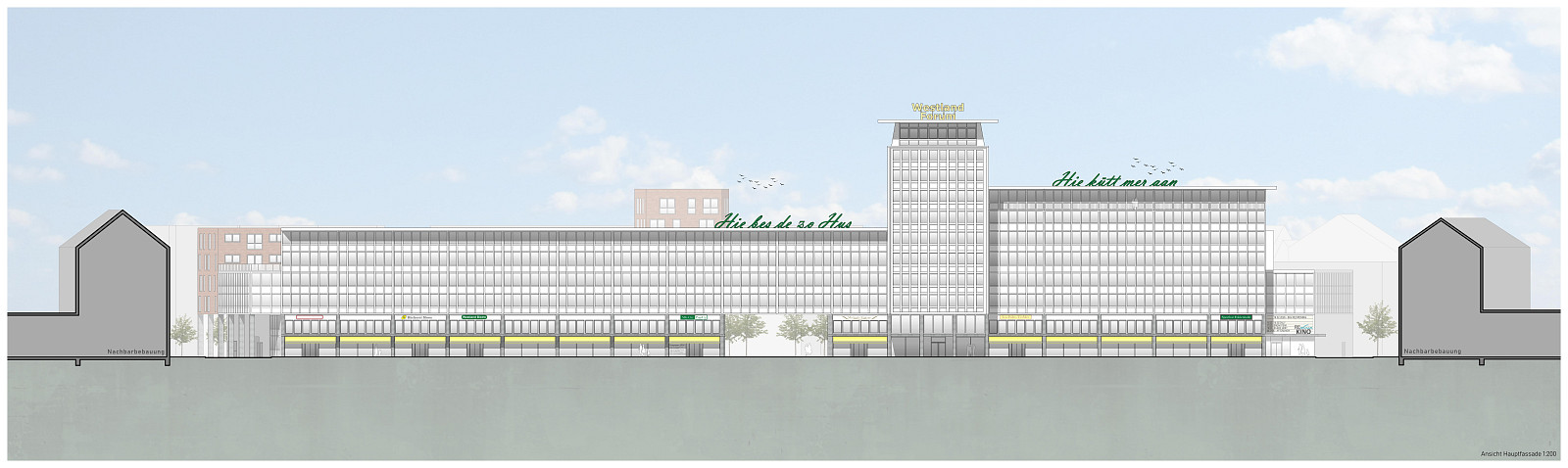
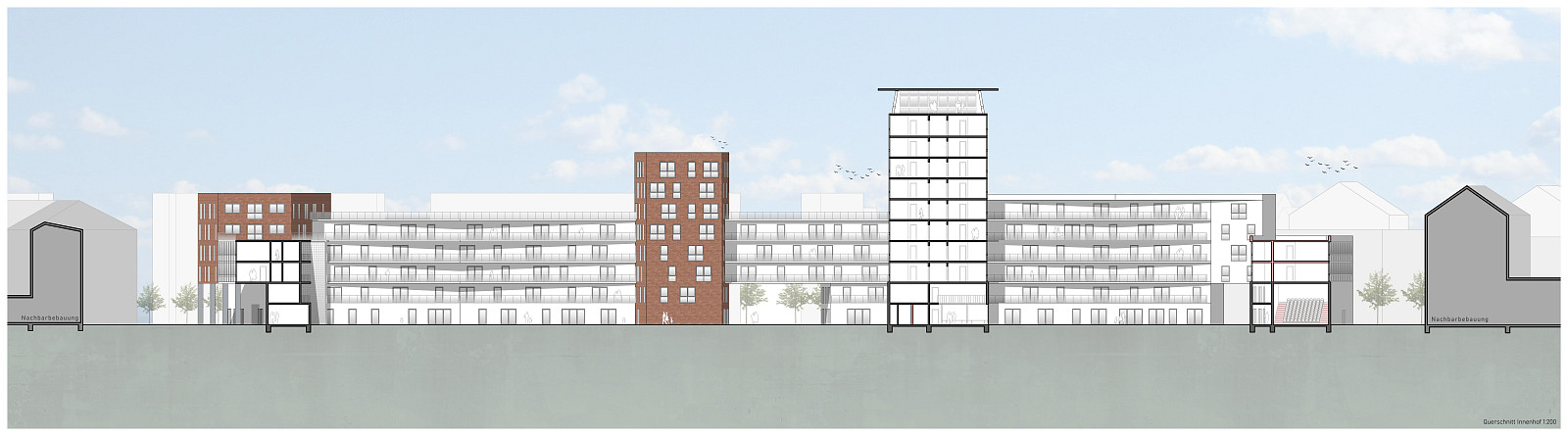
At the architectural scale, the project explores the adaptive reuse of the existing Haus Westland building combined with a complementary new structure. The proposal preserves key elements of the historical building while introducing a contrasting polygonal volume that completes the urban block and creates new spatial relationships within the site. This approach allows the existing architecture to remain legible while enabling contemporary spatial qualities and improved functionality.
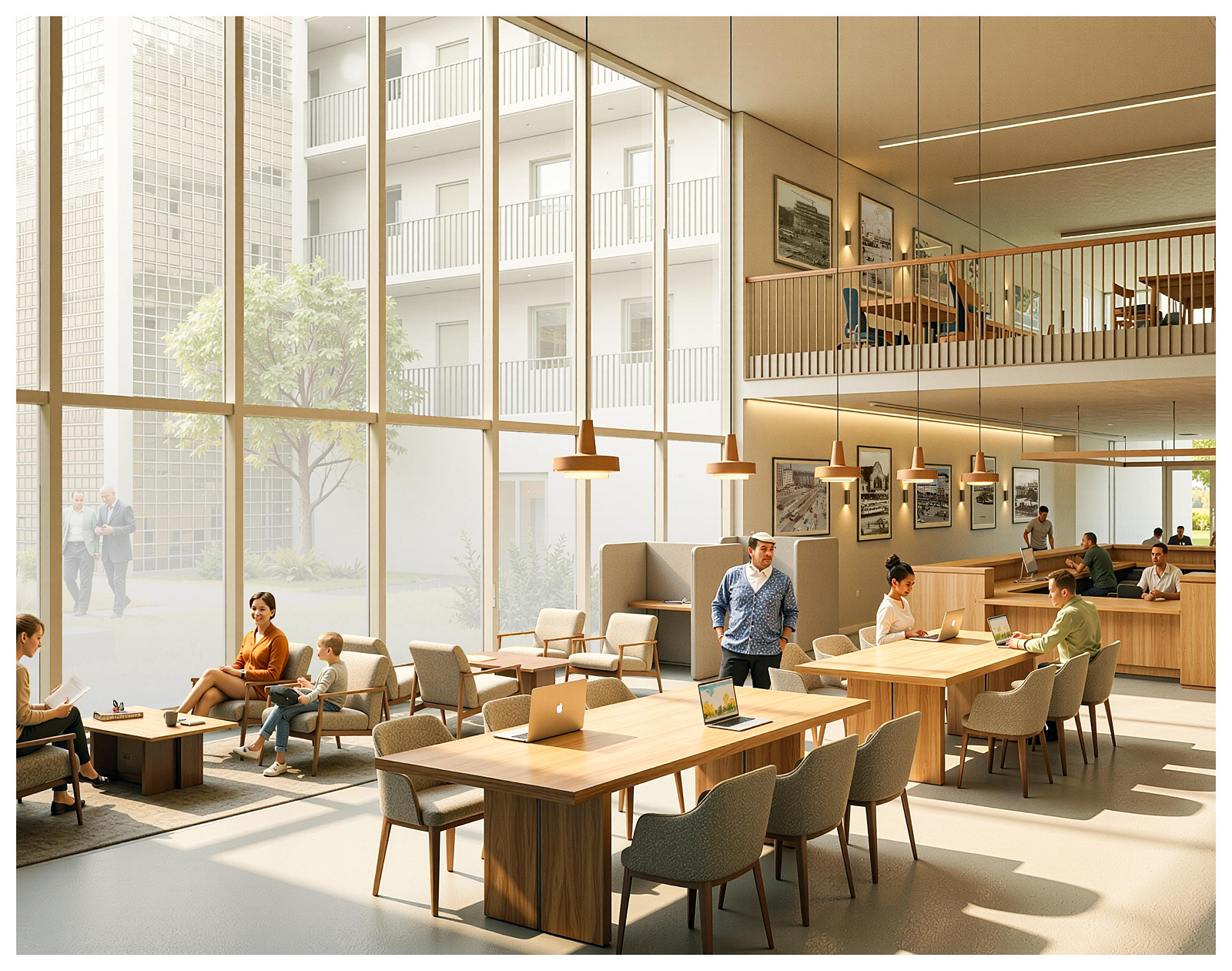
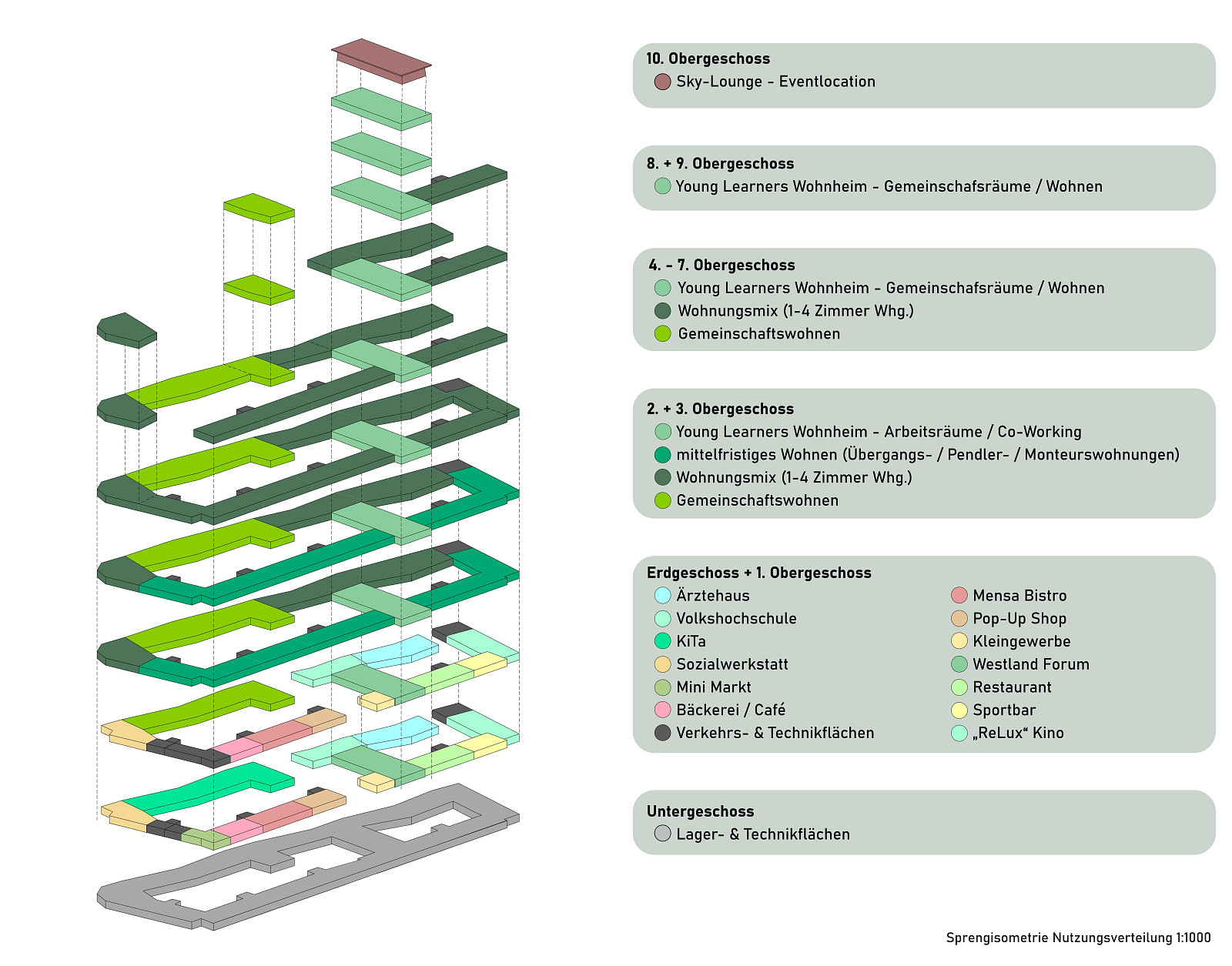
The program of the building is based on a mixed-use concept designed to activate the site throughout the day. The lower levels accommodate publicly accessible uses such as educational facilities, social services, retail, and cultural spaces, including the reactivation of the historical ReLus cinema as a contemporary interpretation of an open-loop news and short-film theater. Upper levels contain different forms of housing, ranging from temporary accommodation and shared living models to student-oriented housing. Communal spaces and shared facilities are integrated throughout the building to support social interaction and collective use.
The scope of the project solution therefore includes three interconnected components: the development of a broader urban framework for the station district, the architectural transformation and extension of Haus Westland, and the design of public and semi-public open spaces such as the forecourt and interior courtyards. Together, these interventions aim to establish a coherent spatial structure that enhances the identity of the site, improves its functional performance, and repositions the area as a welcoming urban gateway to the city.
Technické informace
The technical concept of the project is based on the combination of preservation and modern construction. The existing structure of Haus Westland is retained and adapted, while the new building volume is constructed using a modern timber-based structural system. This approach reflects both the architectural intention of creating a clear contrast between old and new and the objective of reducing environmental impact through material efficiency and sustainable construction methods.
The existing building consists of a reinforced concrete structural system typical of post-war modernist architecture. The primary load-bearing elements include concrete floor slabs, columns, and shear walls that define the structural grid of the building. Within the project, this structural framework is largely preserved and reused. Necessary interventions focus on structural reinforcement where required, the modernization of building services, and the adaptation of internal layouts to accommodate new functions. By maintaining the existing structure, the project reduces demolition waste and conserves embodied energy.
In contrast, the newly introduced building volume is designed as a modern timber construction. The primary load-bearing system consists of engineered wood components such as cross-laminated timber (CLT) floor and wall panels combined with laminated timber beams and columns. This system allows for a lighter structural footprint and shorter construction times while providing high structural performance and flexibility for interior layouts. Timber construction also contributes to improved environmental performance through carbon storage and reduced material emissions compared to conventional construction methods.
The building envelope of the new structure is designed with high-performance insulation and energy-efficient glazing to ensure thermal comfort and minimize operational energy consumption. The façade system combines durable materials with a clear architectural expression that distinguishes the new construction from the preserved concrete structure of the existing building.
Building services and technical infrastructure are integrated to support the mixed-use character of the project. This includes efficient heating and cooling systems, modern ventilation strategies, and flexible service distribution that accommodates the different functions within the building. The design also incorporates principles of sustainable urban development, including the integration of green open spaces, permeable surfaces, and climate-sensitive landscaping in the surrounding outdoor areas.
Overall, the technical strategy of the project emphasizes structural continuity, material contrast, and sustainable construction principles. The preserved concrete structure represents the historical foundation of the building, while the new timber construction introduces a modern and environmentally conscious layer that reflects current architectural and technical standards.
Vytvořeno pomocí:


Copyright © 2026 INSPIRELI | All rights reserved. Use of this website signifies your agreement to the Terms of Use, Privacy Policy, and use of cookies.
