INTERVAL


Project idea
In 2050, the university campus functions almost entirely as a digital organism. Amidst this intense technological flow, the campus administration makes a radical decision:
A structure not against technology, but against the mental fatigue created by technology.
Thus, a Detox Facility is designed, close to the center of the campus but consciously detached from the digital axes.
Project description
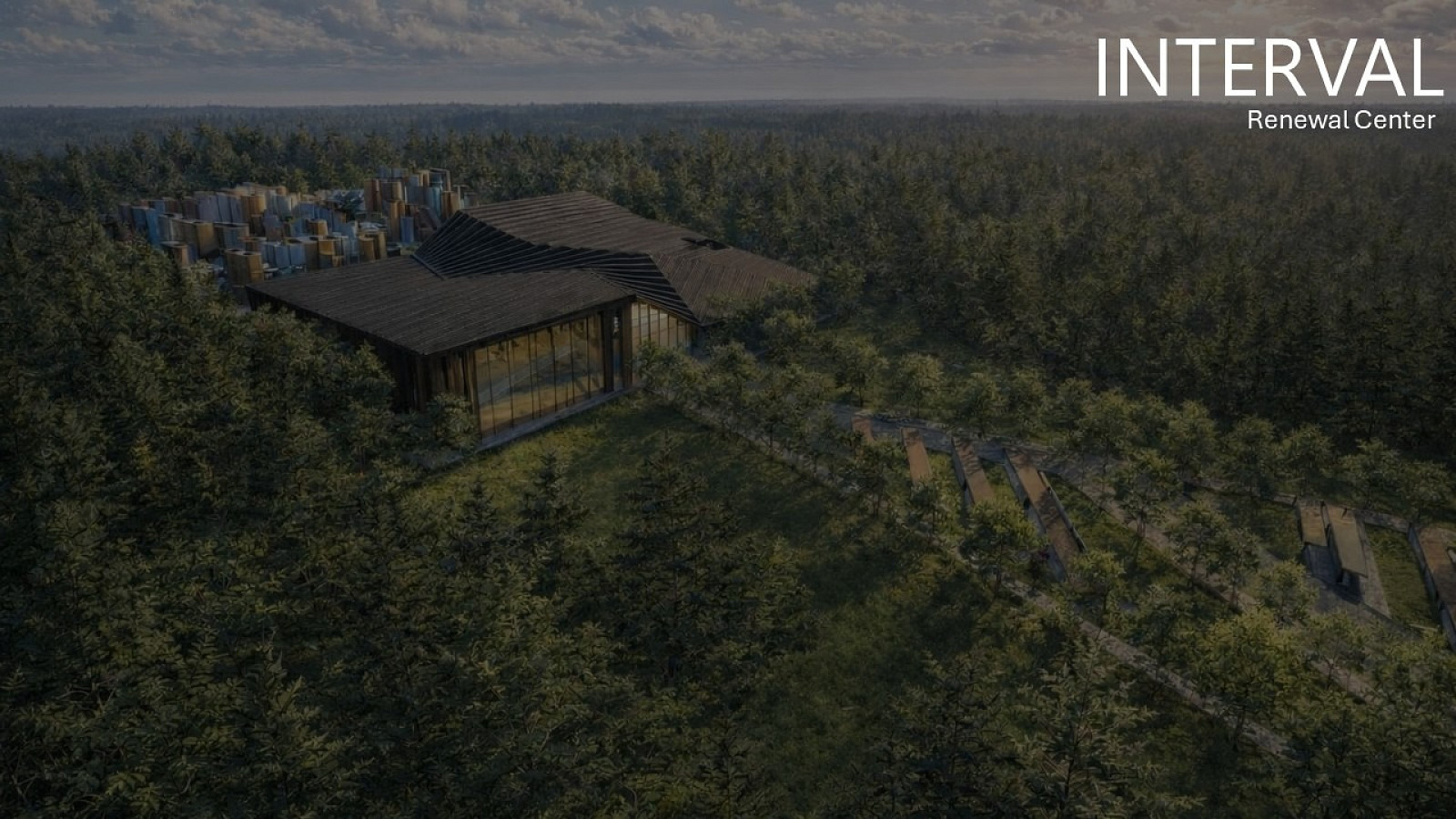
This is a proposed structure that addresses the mental
and physical fatigue created by contemporary life
through a spatial experience of purification and
renewal. The structure is designed not so much as a
therapeutic object, but ratherr to hhelp users reestablish
their own awareness. The structure is shaped through
thresholds, transitions, and intermediate spaces; a
circulation system has been created that slows down
the user and creates a sense of rhythm. Ramps and
fluid lines are the fundamental design tools that
strengthen the body-space relationship. Light,
shadow, texture, and void relationships are handled in
a way that supports the sensory experience; the
architecture recedes into the background, becoming
a structure that accompanies the user's experience.
The project aims not to directly impose healing, but to
create a spatial ground where healing can occur.
Technical information
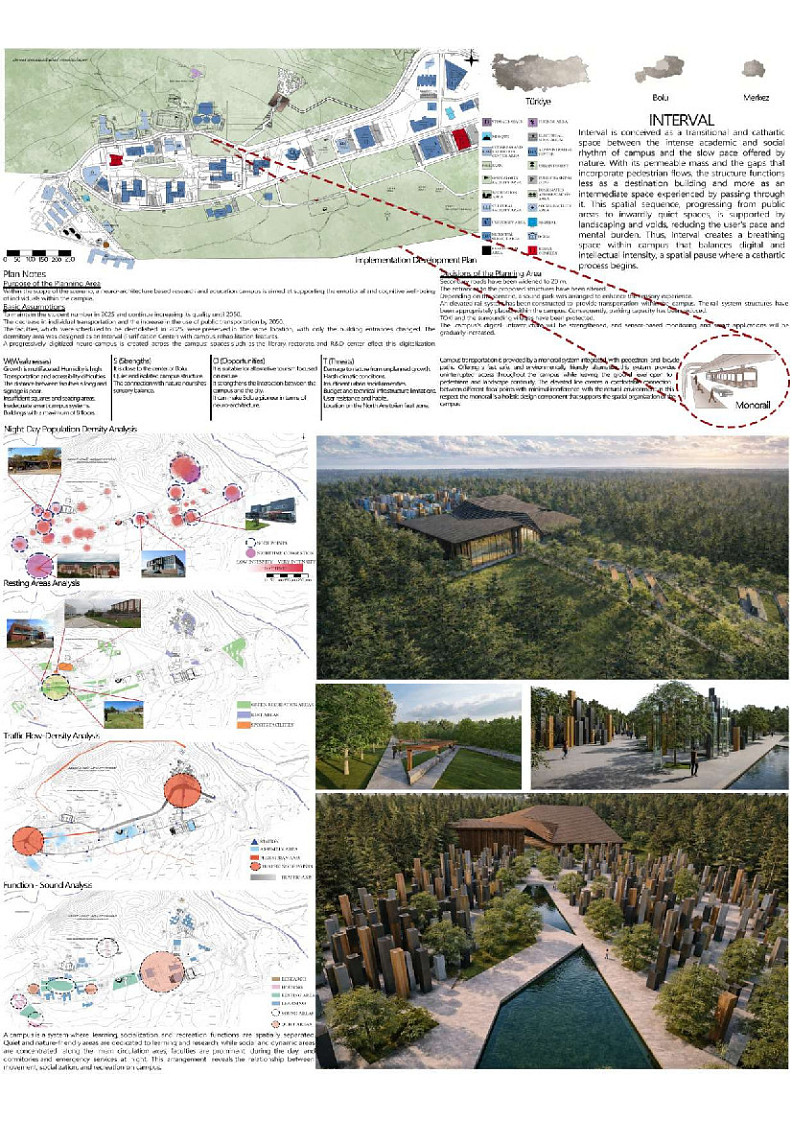
The building is designed with a steel space frame structural system. Steel cables integrated along the interior ramps are conceived as elements that both support structural continuity and enhance the spatial experience. The material language of the building is defined by the use of steel in the primary structural system, wood on interior surfaces, and a combination of wood, metal, and glass in the sound park elements. This multilayered material approach aims to strengthen both the technical performance and the sensory perception of the building.
Documentation

Copyright © 2026 INSPIRELI | All rights reserved. Use of this website signifies your agreement to the Terms of Use, Privacy Policy, and use of cookies.
